EN
EN
 fr
fr  de
de  es
es  it
it  ru
ru  pt
pt  ar
ar  vi
vi  tr
tr  id
id 


.webp "How to Purchase Carbonless Paper Rolls: What Businesses Really Care About When Choosing a Supplier")

Phone:
0086 27 688745330086 18049845758
 GOLDEN PAPER



.webp "Digital Transfer Paper/Sublimation Paper")




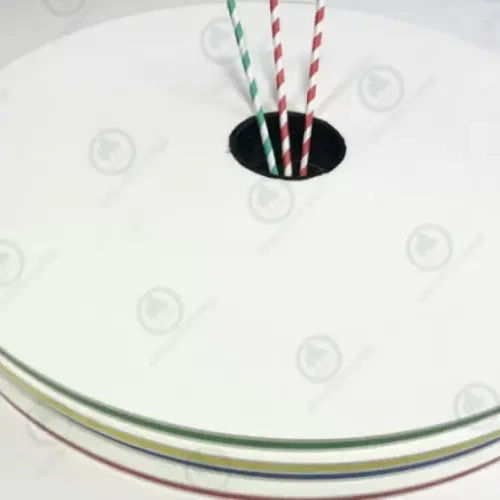

As packaging companies seek to reduce material use without sacrificing performance, lightweight packaging is gaining attention. High Bulk FBB provides greater thickness at a given grammage, helping reduce material consumption while maintaining the stiffness and structure needed for packaging. Keep reading to learn more!
High Bulk FBB is an ivory paperboard designed to provide higher bulk. Compared with conventional FBB, it places greater emphasis on the relationship between grammage, thickness, and volume.
In general, higher paperboard grammage can provide greater thickness and structural support. However, for packaging companies, increasing grammage also means using more fiber raw materials. Therefore, if the paperboard structure can be optimized to achieve better thickness and stiffness at a lower grammage, there is more room to reduce material use.
Here, high bulk does not simply mean making the paperboard as thick as possible. Instead, the goal is to achieve greater thickness within a reasonable grammage range while also meeting the performance requirements of packaging converting.
Therefore, when evaluating High Bulk FBB, you should not look only at grammage. Thickness, bulk, stiffness, and final packaging performance should also be considered together.
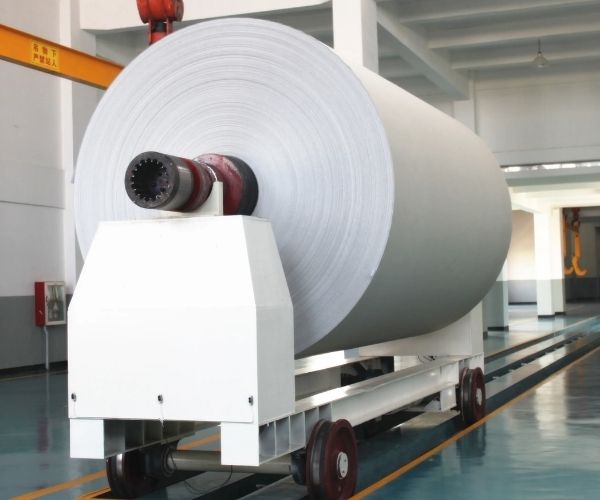
In the past, packaging material selection often focused first on print quality, strength, converting performance, and purchasing cost. As green packaging continues to develop, material efficiency is also becoming part of packaging design and purchasing decisions.
For paperboard cartons produced in large volumes, even a small reduction in paperboard used for each package can make a significant difference when multiplied across hundreds of thousands or even millions of packages.
But true lightweight packaging is not simply about choosing lower-grammage paperboard.
If lower grammage results in insufficient stiffness, the package may deform more easily. If the board becomes too thin, it may also affect the appearance and structural stability of the finished carton. Therefore, lightweight packaging requires a suitable balance between material use and packaging performance.
This is where High Bulk FBB provides a material solution for achieving that balance.
One of the key advantages of High Bulk FBB is its ability to provide good thickness at a given grammage.
This is important for packaging companies. Grammage represents the weight per unit area of the paperboard, while thickness directly affects its volume and structural performance. The two are not exactly the same measurement.
Suppose a packaging design requires a certain paperboard thickness. If conventional FBB is used, the grammage may need to be increased to achieve the required thickness, which also increases material use. With higher-bulk FBB, manufacturers can further evaluate whether similar thickness requirements can be achieved at a lower grammage.
This does not mean that every High Bulk FBB can directly replace a higher-grammage conventional FBB on a one-to-one basis. The actual replacement results still need to be evaluated based on stiffness, compression performance, folding performance, packaging structure, and production equipment.
However, from a material design perspective, High Bulk FBB does provide an optimization path that is different from simply increasing grammage.
The difference between High Bulk FBB and regular FBB is not simply whether the paperboard is thick.
At the same or similar grammage, different paperboards may have different thickness and bulk. For packaging that requires a certain visual thickness and structural support, this difference can directly affect material selection.
When regular FBB needs greater thickness, a higher-grammage grade may sometimes be required. High Bulk FBB, on the other hand, can improve thickness at a given grammage through the paperboard structure itself.
Therefore, when purchasing FBB, it is better to compare grammage, thickness, bulk, and stiffness rather than looking only at the grammage.
For packaging manufacturers, this approach can also make it easier to find a paperboard grade that truly fits the product structure instead of simply increasing grammage to create an extra safety margin.
FBB, or Folding Box Board, is widely used for folding cartons and needs to balance printability, stiffness, and converting performance. For these applications, the paperboard needs a good surface quality while also remaining stable during die-cutting, creasing, folding, and gluing.
High Bulk FBB is particularly suitable for packaging applications that need to balance thickness, stiffness, and lightweight design.
For example, in cosmetic boxes, pharmaceutical packaging, food boxes, daily-use product packaging, and other retail cartons, the packaging needs to hold and protect the product while maintaining a neat appearance and good print quality.
If the paperboard is too thin, reducing grammage may still affect the final packaging performance. Therefore, High Bulk FBB can be a material worth testing when companies develop lightweight packaging designs.

The key value of High Bulk FBB is not simply that it is “lighter.” More importantly, it helps companies rethink how they use paperboard.
When packaging structure requirements are met, higher bulk can give companies an opportunity to reduce the grammage of certain packaging products and therefore reduce material use per package. At the same time, the paperboard still needs sufficient stiffness and converting performance to be suitable for large-scale production.
In addition, for packaging that needs a strong visual feel, thickness is also one of the factors that affects how the package feels and looks. If simply reducing grammage makes the carton noticeably thinner, lightweight packaging may come at the expense of packaging quality. High bulk design can help reduce this trade-off to some extent.
Therefore, the value of High Bulk FBB can be summarized as finding a better balance between material reduction and packaging performance.
When purchasing High Bulk FBB, price and grammage should not be the only considerations. For actual packaging production, the overall performance of the paperboard is more important.
First, pay attention to thickness and bulk, as these are important indicators that distinguish High Bulk FBB from regular paperboard. Stiffness should also be evaluated because cartons need sufficient structural support during forming and transportation.
At the same time, the smoothness, brightness, printability, folding performance, and suitability for die-cutting and gluing can also affect the final application results.
For packaging used for food, pharmaceuticals, and other applications with material safety requirements, the relevant food-contact or other compliance requirements should also be confirmed based on the specific market and application.
Therefore, High Bulk FBB should be selected based on the final packaging application rather than simply choosing the lowest grammage.
For companies working on packaging reduction, material optimization, or green packaging upgrades, High Bulk FBB is worth testing as an option alongside regular FBB and conventional FBB. If you are looking for High Bulk FBB for lightweight packaging, you can select a suitable paperboard grade based on your target grammage, packaging structure, and converting requirements, and confirm the best option through actual sampling and production testing. Contact Golden Paper for a quotation and samples!