EN
EN
 fr
fr  de
de  es
es  it
it  ru
ru  pt
pt  ar
ar  vi
vi  tr
tr  id
id 
Phone:
0086 27 688745330086 18049845758
 GOLDEN PAPER

.webp "Digital Transfer Paper/Sublimation Paper")





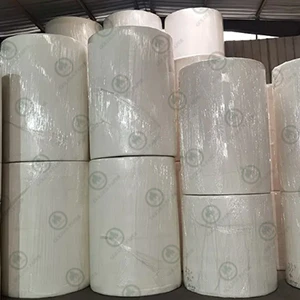
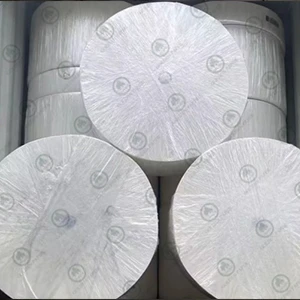

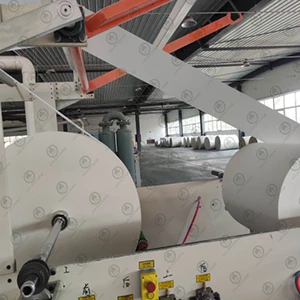
In the papermaking industry, paper bulk is an important property that affects thickness, stiffness, opacity, printability, and material efficiency. Whether you are producing book paper, printing paper, or packaging paper, controlling paper bulk helps achieve the right balance between physical performance and production cost. At Golden Paper, we examine the main factors that affect paper bulk from the mill’s perspective, including fiber selection, pulp type, refining, filler content, pressing, drying, and calendering.
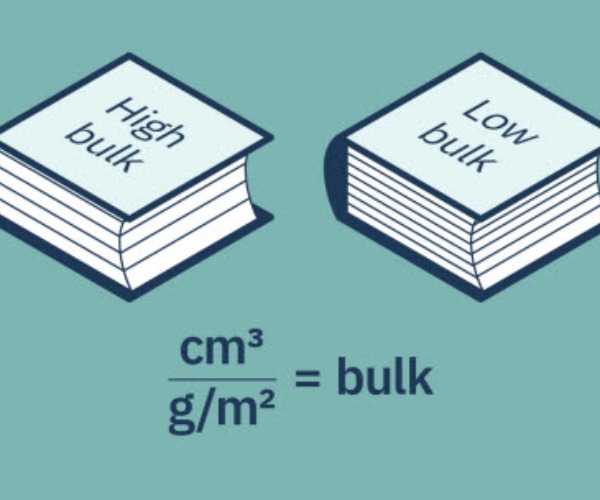
Before exploring what affects paper bulk, it is important to understand why this property matters. Paper bulk refers to the volume of paper per unit weight and is closely related to sheet thickness and density. A higher bulk value generally means that a sheet can achieve greater thickness at the same basis weight.
Higher paper bulk can help reduce the amount of fiber required to achieve a target thickness, which may improve material efficiency and lower production costs. At the same time, higher bulk can contribute to better stiffness, opacity, and thickness, depending on the paper grade and fiber structure.
In book printing, for example, high-bulk paper can provide greater thickness and a fuller feel without significantly increasing basis weight. In printing applications, sufficient bulk can also contribute to opacity and reduce the visibility of printing from the reverse side.
For paper manufacturers and buyers, the goal is not simply to maximize bulk, but to achieve the appropriate bulk level for the intended application while maintaining strength, surface properties, printability, and cost efficiency.
Paper bulk is commonly expressed as specific volume, or the volume of paper per unit weight, usually in cm³/g. It is closely related to sheet thickness, basis weight, fiber arrangement, and internal porosity. Several papermaking factors can affect paper bulk, including fiber characteristics, pulp type, refining, filler content, pressing, drying, and calendering.
The structure of the fibers used in papermaking is one of the most fundamental factors affecting paper bulkness. Fiber length, thickness, and cell-wall structure all influence the formation of pores in the paper.
Generally, coarse fibers tend to create more voids and a looser paper structure, resulting in higher bulkness. Finer fibers, on the other hand, pack more tightly, making the paper denser and less bulky.
However, bulkness is not just determined by fiber size — it’s also affected by how fibers deform during pressing and drying. Excessive compression can collapse the fiber walls and destroy the pore structure, reducing bulkness.
At Golden Paper, we use high-quality wood pulp and carefully control fiber treatment to preserve elasticity and maintain the desired paper bulk.
Different types of pulp have different fiber characteristics, lignin content, flexibility, and bonding behavior, all of which can affect paper bulk.
In general, high-yield pulps tend to produce higher bulk because more of the original wood structure is retained and the fibers are less completely collapsed. Thermomechanical pulp can also provide relatively high bulk, while kraft pulp generally produces stronger and denser fiber networks. Recycled pulp may have lower bulk depending on the fiber history and the number of recycling cycles.
Pulp species also influence bulk. Hardwood and softwood fibers differ in length, width, flexibility, and wall structure, so their effects on bulk depend on the pulp type and papermaking conditions. For this reason, pulp selection should be considered together with refining, pressing, and drying rather than evaluated independently.
Beating (or refining) is a key step in the papermaking process that adjusts fiber flexibility and bonding strength. Beating increases fiber bonding and paper strength, but excessive beating makes the paper too compact, reducing bulkness.
When fibers are over-refined, their surfaces become overly fibrillated, which leads to dense sheet formation. Conversely, moderate beating maintains fiber curl and resilience, which can help increase bulk.
Low-consistency beating tends to produce tightly bonded fibers and thus lower bulkness, while high-consistency beating preserves some curl, improving the fluffiness and thickness of the paper.
Fillers such as calcium carbonate and kaolin clay are commonly used to improve brightness, smoothness, and printing performance, but they can reduce bulkiness.
Since fillers are denser than fibers, increasing filler content makes the paper more compact and less bulky. Therefore, it’s important to balance filler usage based on the target paper type.
For papers that require higher bulk — such as book paper or lightweight coated paper — the filler content should be carefully controlled or the filler type adjusted to maintain the desired porosity.
The pressing stage removes water from the wet paper web, but it also affects paper density. Excessive press pressure compresses the sheet, reducing air gaps and lowering bulkness.
To balance dewatering and bulk, the press pressure should be optimized.
Modern techniques such as the Extended Nip Press (ENP) allow longer contact time under moderate pressure, improving water removal without crushing the fiber structure. This helps maintain both paper strength and bulkness.
Drying also plays an important role in determining paper bulk. As the drying temperature and time increase, water evaporates and hydrogen bonds between fibers strengthen, making the structure denser and decreasing bulk.
Bulkness is inversely related to the maximum drying shrinkage rate — excessive shrinkage pulls fibers closer together and reduces porosity.
To retain more internal voids, papermakers can lower drying intensity or shorten drying time, preserving a fluffier structure.
Calendering is part of the finishing process that enhances surface smoothness and gloss. It can be performed as hard calendering or soft calendering.
In hard calendering, the paper passes through metal rolls under high pressure, compressing the sheet and reducing bulkness.
Soft calendering, however, uses a resilient roll under lower pressure to smooth the surface while keeping more of the internal bulk intact.
Therefore, when bulkness does not meet product requirements, adjustments such as reducing calendering pressure, decreasing the number of nips, or using soft calenders can help improve thickness and tactile quality.
In summary, the bulkness of paper is affected by multiple factors — from fiber type and pulp properties to pressing, drying, and calendering processes. At Golden Paper, we carefully balance physical performance and cost efficiency through advanced formulations and optimized production techniques. Contact us today to request samples or a custom quote for your next paper project!