EN
EN
 fr
fr  de
de  es
es  it
it  ru
ru  pt
pt  ar
ar  vi
vi  tr
tr  id
id 

Phone:
0086 27 688745330086 18049845758
 GOLDEN PAPER

.webp "Digital Transfer Paper/Sublimation Paper")



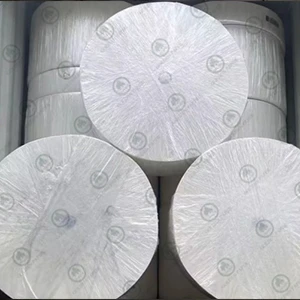

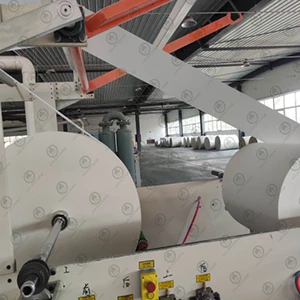
Among the many performance indicators of paper, “bulkness” is often overlooked. However, it is actually a key parameter that determines paper quality, cost, and end-use. For paper grades that require stiffness, opacity, or thickness, bulkness not only affects the final product’s performance but also plays a vital role in cost control and process design during paper production. This article will give you an in-depth look at what paper bulk is, what factors influence it, and how we improve bulkness in industrial papermaking.

Bulk refers to the ratio between a paper’s thickness and its basis weight (mass per unit area), typically expressed in cm³/g. It reflects how loosely or densely the fibers are arranged, or the porosity of the sheet. Simply put, the higher the bulk, the fluffier the paper feels at the same weight. High-bulk paper can maintain good stiffness and opacity while remaining lightweight, making it widely used in copy paper, coated paper, and paperboard.
In applications like packaging or writing, paper must maintain structural stability. High-bulk paper can retain stiffness without increasing grammage, helping reduce material usage.
A bulky structure effectively blocks light from passing through, improving opacity—an essential requirement for printing paper.
By increasing paper bulkness, we can reduce grammage without sacrificing quality, thereby lowering fiber consumption and optimizing production costs.
Bulkness is influenced by a variety of factors—from raw material selection to papermaking processes—each step can significantly impact the final bulkiness of paper.
The thickness and structure of fibers directly affect porosity, and thus the bulkness of the final sheet. Coarse fibers are less likely to collapse, creating a looser sheet structure and higher bulk; fine, slender fibers are more easily compacted during pressing and drying, resulting in a denser structure and lower bulk. For example, fibers with a small diameter and thick walls are stiffer and less deformable, making it easier to produce high-bulk paper; in contrast, soft and flexible fibers are more suitable for manufacturing low-bulk, high-density paper grades.
Different pulp types vary significantly in fiber structure and lignin content, leading to different bulk performance. Generally, from highest to lowest in bulk:
High-yield pulp (e.g. BCTMP, CTMP)
Thermomechanical pulp
Kraft pulp
Recycled pulp
High-yield pulp retains more lignin and fiber rigidity, offering excellent bulk characteristics and is widely used in printing paper and paperboard. Among various raw materials, maple high-yield pulp performs best in bulk, reaching up to 3.8 cm³/g—significantly higher than birch, poplar, or eucalyptus—making it especially favored in products requiring high bulk.
Beating alters fiber bonding and flexibility, significantly affecting sheet structure and bulk. Intensive beating causes severe fiber deformation and increases bonding, creating denser paper with lower bulk. In contrast, light beating or high-consistency beating helps retain fiber stiffness and prevent excessive collapse, maintaining higher bulk. In this process, controlling fiber curl is particularly important—proper curl can enhance both volume and stiffness. Therefore, by adopting high-consistency beating strategies and optimizing fiber curl, we can achieve high bulk while maintaining paper strength.
This is currently the most direct and effective way to increase bulk. In both uncoated and coated paper production, 10% to 30% of high-yield pulp is commonly used to replace bleached kraft pulp. This not only maintains paper machine runnability but also improves stiffness, opacity, and bulk. For paperboard, using high-yield pulp in the middle layer enhances structural performance while reducing total grammage and cost.
Fillers improve optical properties but often negatively impact bulkness. Due to their high density, fillers increase grammage and fill fiber pores, compressing the sheet structure and reducing bulkness. The extent of this effect varies by filler type. From least to most impact:
Silica
PCC (precipitated calcium carbonate)
Kaolin ≈ Talc
Among these, PCC is considered the most suitable filler for bulk-sensitive papers because its particles tend to form porous aggregates that can help maintain fiber spacing and improve bulk.
At our mill, we also use specific chemical agents to prevent hydrogen bonding between fibers, thereby loosening sheet structure and increasing bulk. These agents are usually quaternary ammonium compounds with both hydrophobic and hydrophilic properties, widely applied in cultural paper and lightweight packaging grades where high bulk is needed.

Beyond raw materials, every step during sheet formation affects final bulkness performance:
Traditional roll pressing easily over-compresses the sheet, reducing bulkness. In contrast, shoe pressing uses a wider nip to remove water gently, preserving more fiber porosity. Studies show that at 40% dryness, shoe-pressed paper exhibits an 11.3% increase in bulk compared to roll-pressed sheets.
During drying, internal fiber shrinkage compresses the structure, decreasing bulkness. Reducing drying time, lowering temperature, or using segmented drying can minimize shrinkage and preserve bulk.
Calendering improves surface smoothness but often reduces bulkness. Compared to hard-nip calendering, soft-nip calendering better preserves the sheet’s original structure. Furthermore, metal belt calendering is a new technique that features a longer nip area. It improves surface quality while increasing bulk by 3%–10%, making it the preferred finishing process for modern high-bulk papers.
In today’s focus on sustainability, lightweight design, and energy efficiency, developing and applying high-bulk paper is undoubtedly a key direction for the paper industry. If you're sourcing high-bulk printing or packaging paper, or other paper products, feel free to contact us at Golden Paper. With over 20 years of papermaking experience, we offer professional service and high-quality paper to meet your needs—reach out to us today!