EN
EN
 fr
fr  de
de  es
es  it
it  ru
ru  pt
pt  ar
ar  vi
vi  tr
tr  id
id 
Phone:
0086 27 688745330086 18049845758
 GOLDEN PAPER

.webp "Digital Transfer Paper/Sublimation Paper")



You receive a complaint email from your customer: “The paper cups made from your cupstock paper are leaking.”
In cupstock paper procurement, this type of feedback usually signals that the barrier system has already started to fail.
In real applications, slight variations in basis weight can often be tolerated, color differences can usually be adjusted, and stiffness variation may sometimes be corrected through process optimization. However, once leakage occurs, the issue becomes fundamentally different, because it directly indicates a failure of the material’s barrier performance.
More importantly, this type of problem is rarely caused by a single factor. It is usually the result of multiple conditions interacting and creating a systemic instability. If you want to understand it better, keep reading.
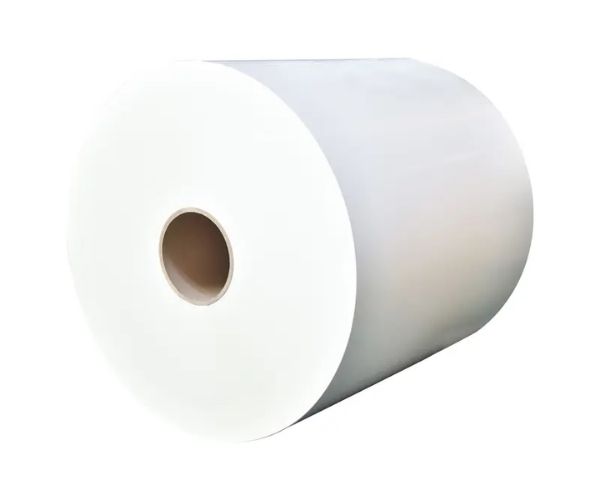
When people face paper cup leakage issues, they often try to find a clear defect such as a visible hole or damage point. However, in real production and usage, this “single-point failure” is rarely the case.
More commonly, liquid migrates gradually through microscopic pathways inside the material under hot liquid conditions. These pathways are not visible at room temperature but become active when exposed to hot water, leading to penetration behavior.
From a structural perspective, paper cup leakage is usually the result of combined failure in the coating system, sealing interface, and base paper strength, rather than a single isolated defect.
The fundamental performance of cupstock paper comes from its fiber network structure, which determines how liquid spreads within the paper substrate.
When pulp ratio is unstable or refining is insufficient, fiber bonding becomes weaker and more interconnected voids form inside the paper. These changes do not significantly affect appearance or basis weight data, but they alter the migration path of liquid inside the material.
In this condition, even with a PE coating layer, liquid may still slowly travel through capillary channels formed by fibers.
Studies have shown that paper-based materials are naturally porous. Without a sufficiently dense fiber structure, liquid absorption or penetration can still occur even when a surface barrier layer exists.
A more critical issue happens at the interface layer. When the base paper structure is too loose, PE coating is more likely to experience local stress release under hot water conditions, leading to microscopic interfacial separation. This separation does not appear as visible peeling but exists as extremely fine gaps that gradually become leakage channels.
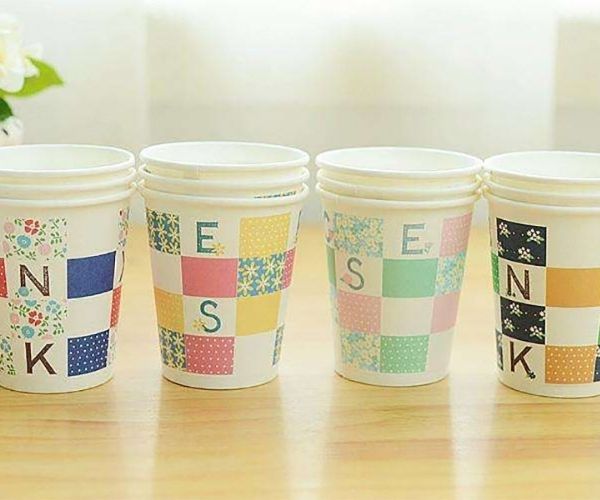
The main function of PE coating is to form a continuous barrier layer, but this continuity heavily depends on coating uniformity control.
In real production, coating thickness variation is typically at the micron level. Such differences are invisible to the naked eye but are sufficient to affect local barrier performance. When certain areas have thinner coating, penetration tends to occur first in those regions when exposed to hot liquid.
Industry analysis generally agrees that uneven coating distribution reduces overall barrier stability and increases leakage risk over time.
In addition to thickness variation, pinholes are another high-risk but low-visibility failure source. Pinholes are usually formed when dust, fiber debris, or tiny impurities are trapped during the coating process. These are encapsulated inside the coating layer and cannot be detected initially, but later become liquid migration channels.
From a testing perspective, such issues cannot be reliably identified through visual inspection. Instead, moisture permeability tests or dye penetration tests are required to reveal real defects.
Problems caused by insufficient basis weight usually do not appear as overall leakage, but are concentrated in areas with the highest structural stress.
During paper cup forming, the bottom area undergoes molding pressure, folding, and localized stretching. When basis weight is insufficient, the fiber network cannot withstand this combined stress. The first failure usually occurs at the transition zone between the cup bottom and sidewall.
This type of failure has a clear feature: the PE layer remains intact, but the paper substrate has already developed microscopic fractures. Once the substrate loses support, the PE film alone cannot withstand internal pressure, leading to rupture or leakage under hot water conditions.
Research indicates that basis weight and coating thickness must be properly matched. Otherwise, structural instability may occur under high-temperature or high-speed forming conditions.
This also explains why the same paper grade performs differently in different cup sizes. Smaller cups have lower curvature and lower forming stress, while larger cups require significantly higher material strength and elongation resistance.
In many real-world cases, leakage is not caused by the paper itself, but by mismatch between sealing interface and processing conditions.
The bottom of a paper cup relies on PE thermal melting properties to form a sealed structure. When heating temperature is insufficient, PE does not fully melt and cannot form a proper bond. When temperature is too high, PE flows excessively and weakens the sealing area. When pressure is uneven, partial unsealed zones may form.
From a failure analysis perspective, cross-section inspection of the cup bottom can help identify the cause. If the PE layer remains intact but no fusion is formed, it usually indicates process parameter deviation. If the PE layer is detached, it is more likely related to coating adhesion issues.
Industry practice shows that the sealing area is one of the most sensitive parts of paper cup structure, and its stability depends heavily on temperature, pressure, and positioning accuracy.
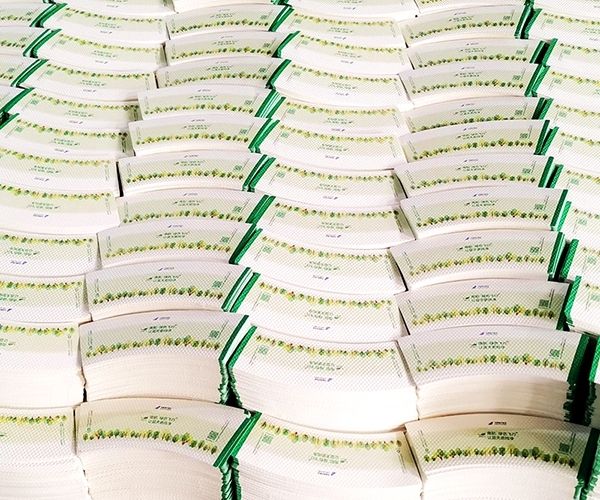
In cold drink applications, leakage does not always originate from liquid inside the cup. It can also come from external wall conditions.
When ambient humidity is high, condensation continuously forms on the outer surface of the cup. If the outer PE coating weight is insufficient, moisture may gradually penetrate into the paper substrate through microstructures.
At the same time, the cup rim area is subjected to continuous mechanical stress during forming, making the outer PE layer more vulnerable to localized wear. Once micro-damage occurs, condensation water can slowly enter the structure and eventually lead to softening or visible leakage behavior.
From practical experience, paper cup leakage is rarely caused by a single defect. More often, it results from imbalance between base paper structure, coating condition, and forming process under specific conditions. As a paper manufacturer with over 20 years of export experience, Golden Paper is committed to providing high-quality cupstock paper solutions. Feel free to contact us for samples and quotations.