EN
EN
 fr
fr  de
de  es
es  it
it  ru
ru  pt
pt  ar
ar  vi
vi  tr
tr  id
id 


Phone:
0086 27 688745330086 18049845758
 GOLDEN PAPER



.webp "Digital Transfer Paper/Sublimation Paper")
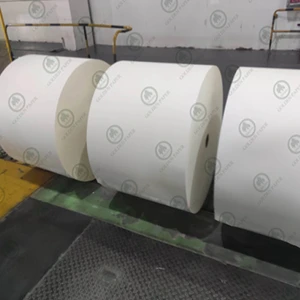

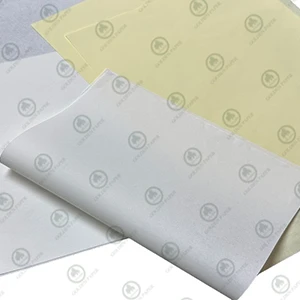


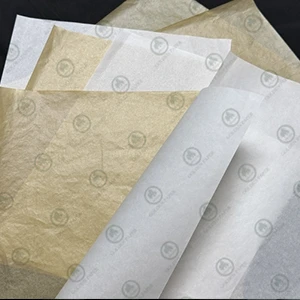


In the printing industry, there is one paper specification you simply cannot ignore — paper opacity. Whether you are just entering the printing field or want to learn more about paper so you can make better purchasing decisions and choose the right suppliers, this guide will help you understand everything you need to know. Keep reading to gain the clarity you need before your next paper order.

Paper opacity is a key optical property that measures how well a sheet of paper blocks light from passing through. In simple terms, it reflects the paper’s ability to prevent show-through under lighting conditions. This ability is shaped by several internal factors, including fiber structure, filler distribution, the number of light-scattering interfaces, and the refractive index differences between these interfaces.
When paper contains more scattering interfaces, has well-balanced fiber gaps, and uses fillers with strong refractive characteristics, light is repeatedly scattered and refracted inside the sheet. This reduces the amount of light that passes through and results in higher opacity. Therefore, opacity is not a single property but rather a combined result of optical design, material selection, and papermaking processes.
To better understand opacity, we also need to mention the scattering coefficient and absorption coefficient. The scattering coefficient determines how much light is repeatedly dispersed within the sheet, while the absorption coefficient determines how much light is absorbed before passing through. Together, they form the paper’s visual blocking ability. For example, papers with high filler content (such as calcium carbonate or talc) typically show stronger scattering and therefore higher opacity. Papers made with long fibers tend to focus on strength and stiffness, and may naturally have lower opacity unless compensated by higher filler levels or specific calendering adjustments. This explains why different papers adopt different production strategies according to intended use.
In real applications, higher opacity is not always better. It must be balanced with the paper’s basis weight, thickness, flexibility, and printability. For instance, Bible paper and dictionary paper must remain extremely lightweight while still offering enough opacity for comfortable reading. Packaging paper, on the other hand, prioritizes strength and does not require extremely high opacity.
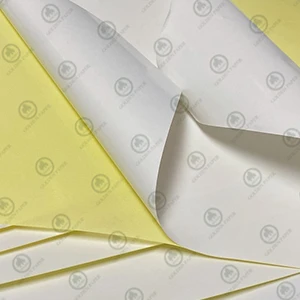
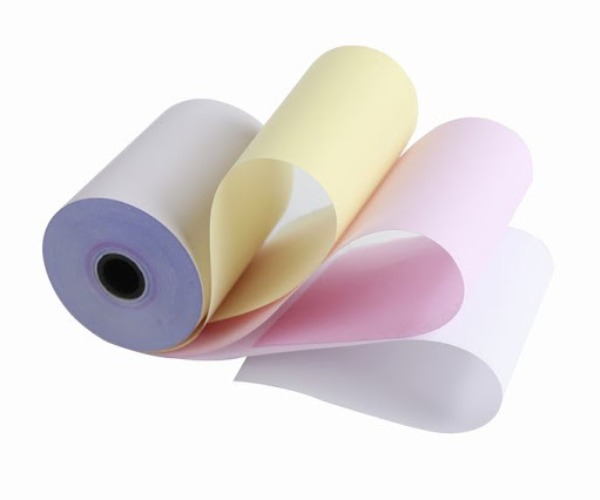
Non-carbon paper (NCR paper) offers a clear example. It follows a widely accepted transparency criterion: when the top sheet and bottom sheet are separated and misaligned, the visible clarity of the lower-layer content through the upper sheet must not exceed 60%. This standard is essential for multi-part forms used in logistics, finance, record-keeping, and other industries. If opacity is not properly controlled, duplicated writing may appear unclear or misaligned, creating confusion and reducing workflow efficiency. In industries such as warehousing, banking, and insurance, poor readability can even lead to operational errors. Although this transparency value may seem minor, it is crucial for NCR paper to function correctly.
Overall, opacity plays a central role in paper’s optical behavior. It affects print quality, reading experience, duplicate writing clarity, and is closely tied to fiber dispersion, filler ratios, calendering, moisture levels, and other production parameters. For this reason, opacity is one of the most important indicators when evaluating the overall quality of printing paper.
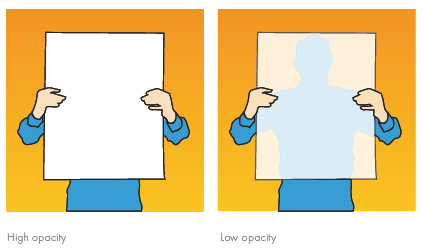
In printing, opacity directly determines how professional the final product looks. Double-sided printing is extremely common, but insufficient opacity causes text or images from the back to show through to the front, making the page look messy and reducing readability. High-opacity paper keeps both sides visually independent, ensuring clean, sharp, and consistent results. Whether it is brochures, catalogs, books, magazines, or high-end color prints, opacity is essential for maintaining strong color saturation, balanced contrast, and accurate reproduction. Papers with poor opacity often produce dull or washed-out colors, reducing the overall visual impact.
Opacity also affects writing performance. If writing easily shows through to the other side, users may find it difficult to read or take notes efficiently. In thin writing paper or multi-page office forms, high opacity minimizes interference between layers, making handwritten content clearer. Schools, offices, hospitals, and financial institutions all rely on good opacity to ensure reliability in daily record-keeping.
Opacity is crucial for applications involving sensitive information. Envelopes, file folders, legal documents, contract paper, checks, and confidential records must prevent content from being easily visible under light. For governments, hospitals, law firms, and financial services, opacity is directly connected to information security and compliance. High-opacity paper protects documents during transport, storage, and handling by reducing the risk of visual exposure.
Opacity is closely tied to fiber structure, filler design, basis weight, pressing methods, and production cost. Improving opacity often requires increasing fillers or adjusting fiber blends, both of which may influence strength, stiffness, surface performance, or ink absorption. This makes opacity a matter of balancing optical properties, physical performance, and cost-efficiency.
For lightweight cultural paper, manufacturers must optimize scattering uniformity to reduce light transmission caused by low basis weight. For bulky paper grades, fiber distribution must be controlled to avoid excessive porosity that increases show-through. These subtle adjustments illustrate why opacity is a core indicator of overall paper performance.
Paper opacity is a critical factor that affects printing quality, reading comfort, information privacy, and overall material performance. From optical theory to practical application, it influences how the final product looks and functions. If you are selecting printing paper, writing paper, or specialty paper for your next project and want to compare different opacity levels, feel free to contact us for samples and pricing. We Golden Paper are ready to help you choose the right paper for your needs.