EN
EN
 fr
fr  de
de  es
es  it
it  ru
ru  pt
pt  ar
ar  vi
vi  tr
tr  id
id 
Phone:
0086 27 688745330086 18049845758
 GOLDEN PAPER

.webp "Digital Transfer Paper/Sublimation Paper")

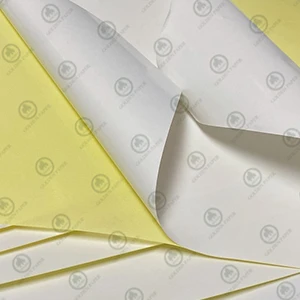
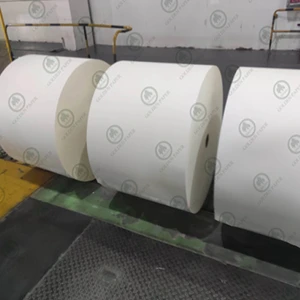

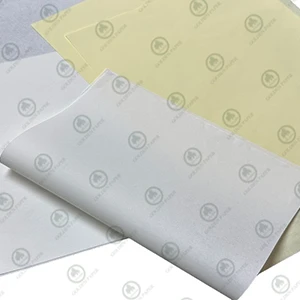

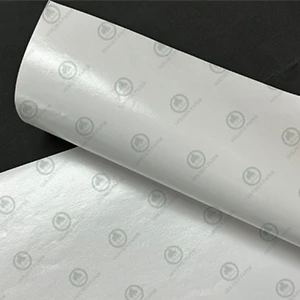

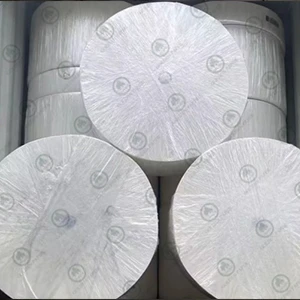

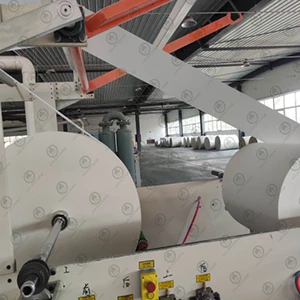
In the printing industry, paper moisture content is a key indicator that largely determines the success of a print job and the final result. So, how does moisture affect paper, what are the optimal moisture levels for different types of paper, and how do you balance moisture control with paper storage? Don’t worry—this article will explain everything clearly. If you are interested, keep reading.
If the moisture level is too low, the fibers lose flexibility and the sheet becomes brittle. In this state, paper generates static electricity during machine runs and friction, which not only disrupts paper feeding but also leads to uneven ink transfer.
If the moisture level is too high, ink struggles to dry, increasing the risk of smudging, set-off, or even print defects that affect product usability. For this reason, controlling paper moisture content in printing is not only essential for print quality but also for the stable production of printing companies.
The influence of moisture goes beyond brittleness or drying speed. As moisture changes, paper properties such as basis weight, tensile strength, flexibility, and folding endurance are all affected.
For example, if you are printing multi-color jobs, size changes caused by moisture variation can result in misregistration, blurred text, or ghosting. Dimensional instability may also cause curling, wrinkling, edge waviness, or even “cockling,” all of which are serious issues in printing.
Because paper moisture content is so critical, most grades are produced with a recommended range of optimal paper moisture levels. Staying within these values ensures that paper maintains its ideal strength and printability.

These ranges are based on long-term production experience, mill testing, and customer feedback, allowing paper to perform at its best during printing and converting.
Paper is hygroscopic, meaning it constantly exchanges moisture with the surrounding air. In a humid environment, paper absorbs moisture. In a dry environment, paper loses moisture. The speed of this process depends on air temperature and relative humidity. When paper reaches balance with its environment, the water it holds is called equilibrium moisture content (EMC).
Relative humidity refers to the ratio of the actual moisture in the air to the maximum moisture the air can hold at a given temperature. This means the equilibrium moisture content of paper in 50% RH is different from that in 70% RH. As a result, humidity control in paper storage directly determines paper printability.
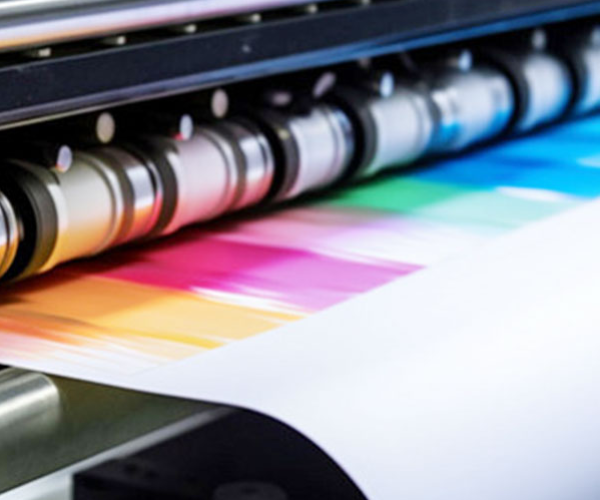
The equilibrium moisture of paper depends on its nature. Papers with stronger hydrophilicity, such as unsized or unfilled base paper, absorb more water. Coated or surface-sized papers, on the other hand, resist moisture and stabilize at lower levels. Even within the same type, thicker board usually has higher EMC than thin sheets.
Temperature also influences moisture balance. At the same humidity, a 15°C change in temperature can shift equilibrium moisture content by about 0.5%. While this may seem small, in color printing, registration tolerances are often within ±0.1%. That is why printing workshops must control both humidity and temperature, usually keeping temperature fluctuations within ±3°C.
Paper shows a hysteresis effect when reaching EMC. The moisture level when paper absorbs water from a dry state is lower than when it loses water from a wet state. To restore the original level, paper often needs to be placed in even drier or wetter conditions.
Absorption and desorption speeds also differ—absorption is generally faster, while drying is slower. For thin sheets like cigarette paper, equilibrium may be reached within 30 minutes, while offset printing paper may take 2–4 hours, and thick boards even longer.
This hysteresis effect also means paper deformation is delayed. When humidity suddenly increases, the sheet does not immediately change size but gradually reacts over time. If workshop humidity fluctuates too often, paper deformation becomes unpredictable and harder to control.
Because fibers align mostly in the machine direction during papermaking, expansion in the cross direction is much greater—sometimes more than twice the machine direction. For instance, when RH increases from 50% to 60%, cross-direction expansion can be about 2.3 times greater. This imbalance affects registration, so reducing fiber orientation during papermaking helps improve stability.
Finally, paper has two-sidedness. Due to differences in formation and coating, the top and bottom surfaces absorb moisture differently. As humidity changes, one side expands more than the other, causing curling along the machine direction. This is especially noticeable in boards, leading to problems like corner lift or warping that complicate later printing and die-cutting processes.
In summary, paper moisture content plays a decisive role in print quality. From mill production to warehouse storage and workshop conditions, every step requires strict control. Only when paper stays within its optimal moisture range can it maintain strength, flexibility, and dimensional stability, ensuring smooth printing and high-quality results. If you have further questions about paper or are looking for reliable paper supply, feel free to contact Golden Paper for professional printing and packaging solutions.