EN
EN
 fr
fr  de
de  es
es  it
it  ru
ru  pt
pt  ar
ar  vi
vi  tr
tr  id
id 
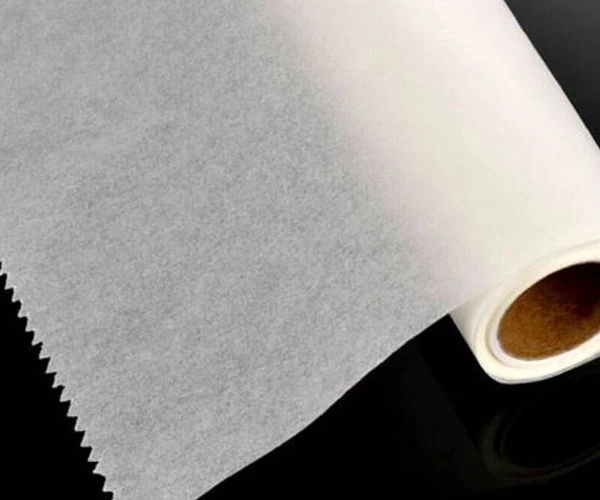
.webp "Cupstock Paper Supplier for Middle East Food Packaging Market")
Phone:
0086 27 688745330086 18049845758
 GOLDEN PAPER

.webp "Digital Transfer Paper/Sublimation Paper")
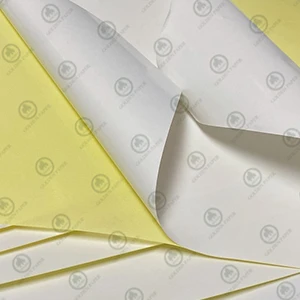
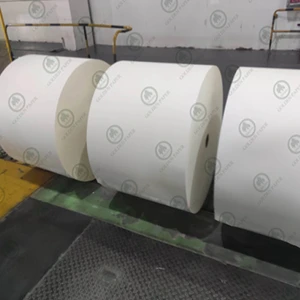

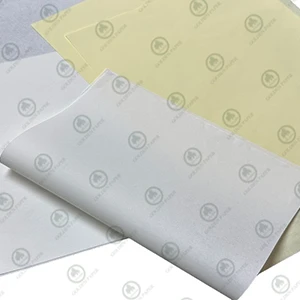

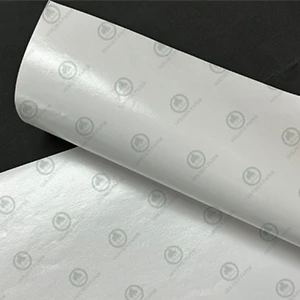
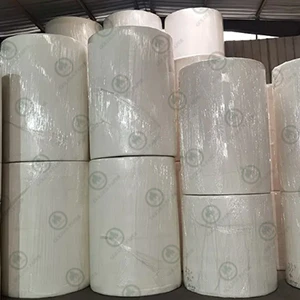
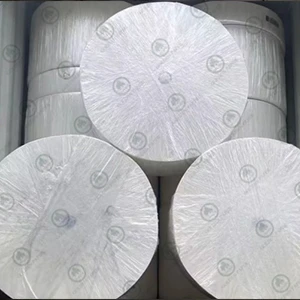

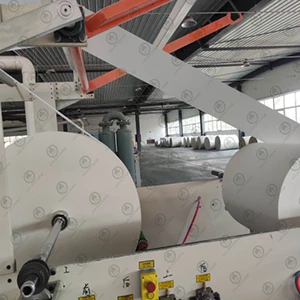
With the rapid development of digital textile printing and personalized production, many businesses tend to focus on printing equipment and ink performance, while overlooking the importance of sublimation transfer paper itself. In fact, the structure of sublimation paper, its ink absorption behavior, and its transfer efficiency all have a direct impact on final print color quality and production stability. If you want to understand how sublimation paper works and how it affects print results, this guide will walk you through everything in a clear and practical way.
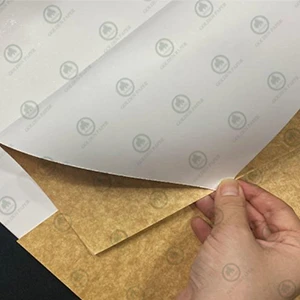
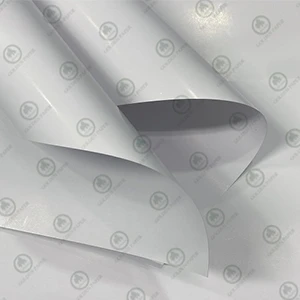
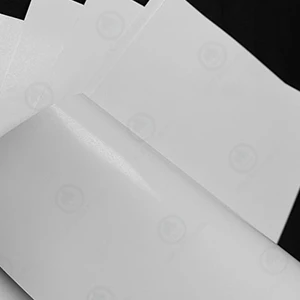
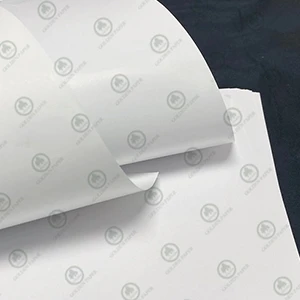
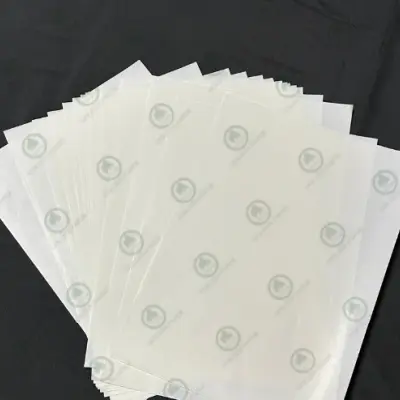
Sublimation paper is a functional transfer paper designed for image and pattern transfer. Its main purpose is not to permanently store printed content, but to temporarily hold dye or ink and release it under controlled heat and pressure.
The working principle is based on the physical transformation of sublimation dye under high temperature. When the heat reaches a specific range, the solid dye in sublimation ink turns directly into gas. These gas particles then penetrate into polyester fibers or specially coated surfaces. As the material cools down, the dye solidifies again inside the substrate, forming a long-lasting printed image.
Unlike traditional printing, where ink remains on the surface, sublimation printing is a transfer-based process. The paper acts only as a carrier, while the final image is formed inside the material. This is why sublimation paper must be designed not only for printing performance, but also for controlled ink release during transfer.
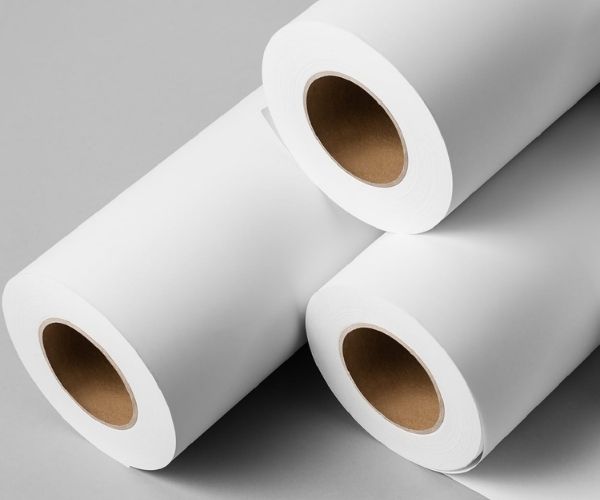
Regular paper is not suitable for sublimation transfer, even if it can print images normally.
Standard paper fibers tend to absorb ink deeply into the structure. During heat pressing, a large portion of the dye remains trapped inside the paper instead of transferring to the substrate. This leads to faded colors, blurred details, and low transfer efficiency.
At the same time, sublimation printing usually takes place at temperatures between 180°C and 220°C. Under these conditions, unstable paper may shrink or deform, causing image misalignment and quality loss.
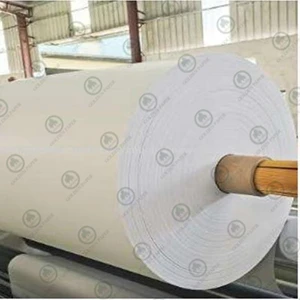
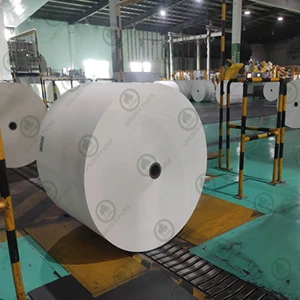
To solve these issues, sublimation paper is engineered with a controlled base structure. The base paper is typically produced from a blend of softwood and hardwood pulp. Softwood fibers provide strength and dimensional stability, while hardwood fibers improve sheet uniformity and surface formation. This combination ensures that the paper remains stable during high-temperature transfer processes while still supporting coating applications.
A stable base structure helps reduce curling and deformation during heat pressing, which is essential for high-precision sublimation printing applications.
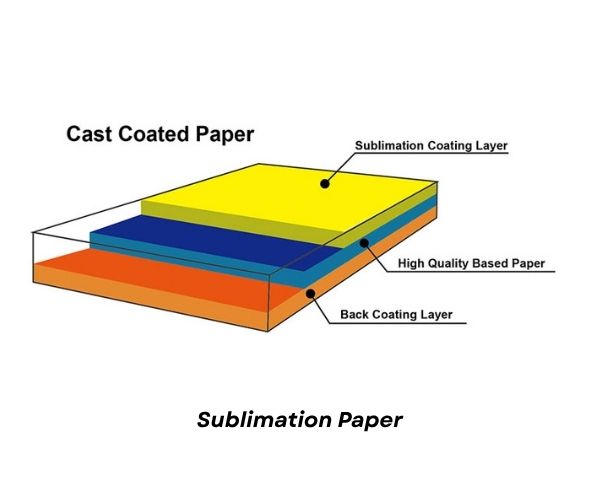
If the base paper ensures stability, the coating layer determines how efficiently the image transfers.
The coating on sublimation paper is typically composed of binders, pigments, and functional additives. Common binders such as carboxymethyl cellulose, starch, and polyvinyl alcohol form a uniform coating layer on the surface. Pigments like kaolin and nano silica help control porosity and regulate ink absorption behavior.
These components work together to keep ink on the surface rather than allowing it to penetrate deeply into the paper. During heat transfer, more dye is released efficiently, improving overall transfer rate and color vibrancy.
A well-designed coating layer also helps control dot spread during printing, resulting in sharper image edges and more detailed color reproduction. This is especially important for photo-quality sublimation printing and high-resolution textile applications.
Some types of sublimation paper include an additional release layer.
This layer is typically made with silicone-based anti-stick materials that reduce adhesion between the printed image and the paper surface. As a result, the printed design can separate more easily during heat transfer, reducing issues such as ink residue, image sticking, or partial transfer loss.
In applications involving hard substrates such as ceramic, glass, and metal, a release layer helps improve image integrity and ensures more stable production results.
Although all products are referred to as sublimation paper, different substrates require different transfer behaviors. This has led to several product categories in the market.
Dye Sublimation Transfer Paper for Textiles
Dye sublimation paper is mainly used for polyester fabrics and polyester-blended textiles.
Because sublimation dye can penetrate directly into polyester fibers, the printed image becomes part of the fabric itself rather than sitting on the surface. This helps maintain the original softness and breathability of the material while delivering strong wash and abrasion resistance.
This type of sublimation paper is widely used in sportswear, jerseys, custom T-shirts, caps, and promotional flags.
Cotton fabrics cannot directly absorb sublimation dyes. To solve this limitation, heat transfer paper uses a special adhesive layer to bind the image onto the fabric surface.
This makes it possible to achieve vivid and clear prints even on dark cotton textiles. It is commonly used in custom apparel production, small-batch orders, and promotional textile products where design flexibility is important.
For non-textile materials such as ceramic, glass, and metal, the transfer requirements are completely different.
These applications require specially engineered coating systems and release layers to ensure the design adheres properly to rigid surfaces. After transfer, the printed image provides strong decorative performance and long-term durability. Typical applications include mugs, metal plates, and customized craft products.
As the advertising industry continues to grow, large-format printing systems require higher paper stability.
Inkjet sublimation paper used in this segment must support high-speed printing while maintaining dimensional stability and tensile strength. These properties make it suitable for outdoor advertising, exhibition displays, and large commercial banners.
The widespread adoption of sublimation printing is not only due to efficiency, but also because it meets modern demands for quality, sustainability, and customization.
Sublimation printing can reproduce photo-quality images with smooth color gradients and high detail accuracy. Since dye transfers evenly into the substrate, complex graphics and photographic designs can be reproduced with high fidelity.
In addition, the process does not require plate-making. Digital files can be directly printed, which makes small-batch production and personalized customization economically viable.
From an environmental perspective, sublimation printing does not rely heavily on water usage or chemical washing processes. This significantly reduces wastewater generation, making it more aligned with modern sustainable manufacturing standards.
When properly controlled, the transferred image bonds well with the substrate, providing stable performance even under frequent washing, long-term use, or friction.
.jpg "sublimation_paper_application_(2).jpg")
Sublimation paper is now widely used across multiple industries.
In the textile and apparel industry, it is used for sportswear, fashion garments, uniforms, and custom clothing production. In advertising, it is commonly used for flags, banners, and display graphics. In the construction and decoration sector, it is applied to ceramic tiles, metal panels, and signage. In the gift and customization market, products such as mugs, phone cases, tumblers, and stainless steel items rely heavily on sublimation transfer technology.
As demand for customized products continues to grow, the application range of sublimation paper continues to expand.
Sublimation paper is more than just a printing consumable. It plays a critical role in determining print quality, transfer efficiency, and final product performance. For businesses that require stable production and high-quality output, selecting the right sublimation paper is just as important as choosing printers and ink systems. Golden Paper is committed to providing reliable sublimation paper solutions that help customers achieve higher transfer efficiency and superior print quality.