EN
EN
 fr
fr  de
de  es
es  it
it  ru
ru  pt
pt  ar
ar  vi
vi  tr
tr  id
id 
.webp "Types of Coated Paper")
Phone:
0086 27 688745330086 18049845758
 GOLDEN PAPER

.webp "Digital Transfer Paper/Sublimation Paper")
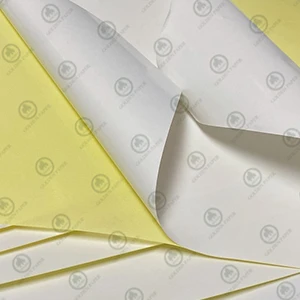
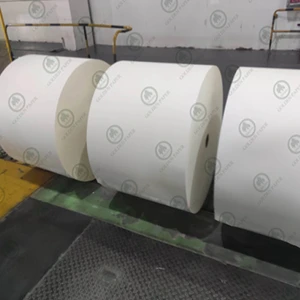

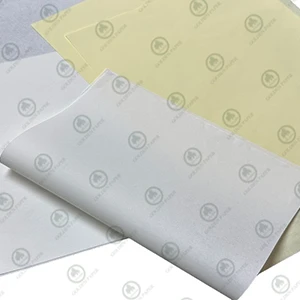

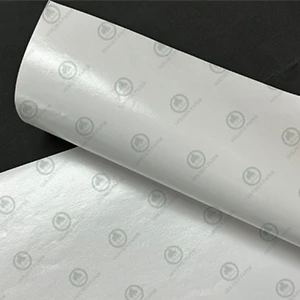
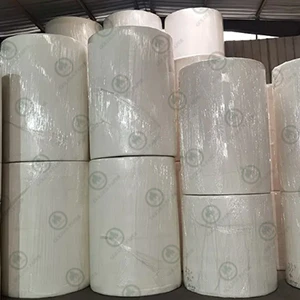
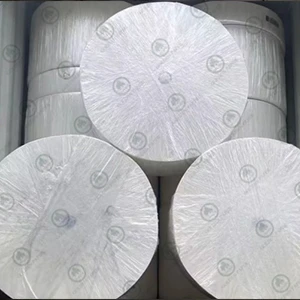

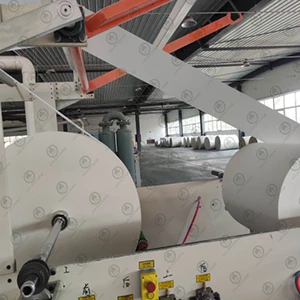
When sourcing PE coated paper, many buyers face the same questions. Why do some applications only require single-side PE coating while others require double-side coating? What is the difference between 8 gsm and 18 gsm PE coating? Should you choose LDPE or HDPE?
These specifications are not arbitrary. Each parameter directly affects the performance of the paper in real-world applications. Choosing the wrong specification can lead to product failure, leakage issues, customer complaints, or unnecessary costs. This guide explains the logic behind the three most important factors when purchasing PE coated paper.
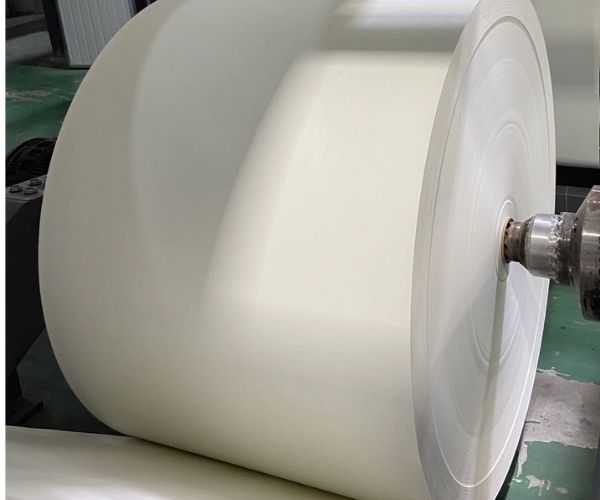
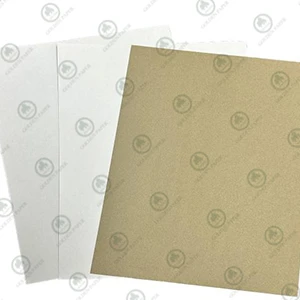
The purpose of PE coating is to provide moisture resistance, grease resistance, and leak protection. Whether you need single-side or double-side coating depends on how the packaged product interacts with the paper.
Single-side PE coated paper is commonly used for dry or semi-dry foods because these products do not attack the paper from both sides.
Burger wrapping paper is a typical example. The coated side faces the food to prevent grease penetration, while the uncoated outer side remains exposed. Since the heat and moisture from handling a burger are not sufficient to soak through the paper in a short period, an outer coating is unnecessary.
In fact, applying PE coating to both sides of burger paper can create a new problem. When freshly cooked burgers release steam, double-sided coating seals both surfaces of the paper and prevents moisture from escaping. Condensation then forms inside the package, making the bun soft and sticky. Therefore, single-side coating is not only a cost-saving choice but also helps maintain the proper breathability of the packaging.
The same principle applies to bakery bags, pastry bags, and nut packaging. The inner coated surface provides grease protection, while the uncoated outer surface remains suitable for printing.
Double-side PE coated paper is typically required for products containing liquids or for applications where condensation forms on the outside surface.
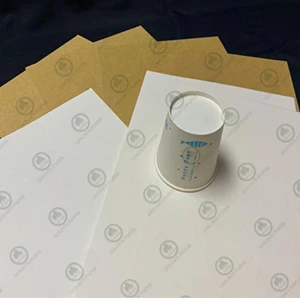
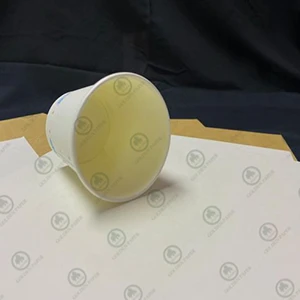
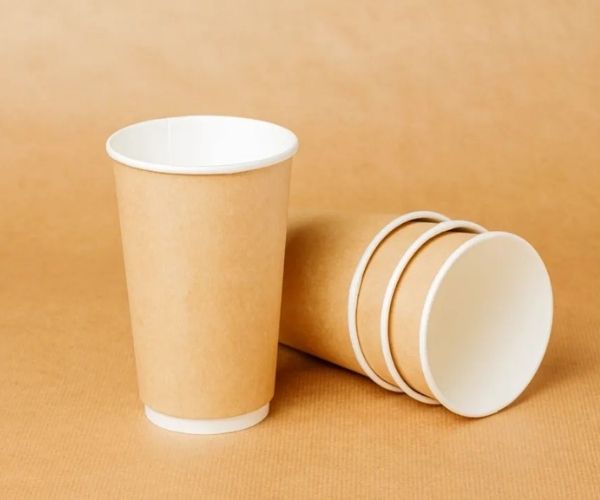
Paper cups are the most common example. Hot beverage cups require an inner PE coating to prevent liquid leakage. However, many buyers wonder why an outer coating is also necessary.
When a hot drink is poured into a paper cup, the temperature difference between the beverage and the surrounding environment causes moisture in the air to condense on the outside surface of the cup. Without an outer PE coating, this moisture would be absorbed by the paper fibers, causing the cup wall to soften and potentially deform or collapse.
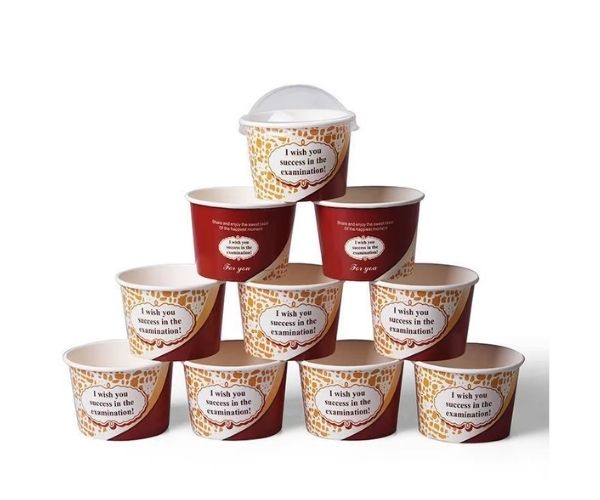
Cold drink cups face an even greater challenge. Ice beverages generate significant condensation on the outer wall. Without external PE protection, an ice cream cup or cold beverage cup may lose its structural integrity within minutes at room temperature.
A simple rule is this: if the package contains liquids or may generate condensation on the outer surface, double-side PE coating is necessary. If only internal grease protection is required, single-side coating is usually sufficient. When in doubt, double-side coating is generally the safer option because the additional PE cost is relatively small compared to the potential losses caused by leakage.
PE coating weight refers to the amount of polyethylene applied per square meter of paper, measured in grams per square meter (gsm). A higher coating weight provides stronger protection but also increases material costs.
The basic principle is simple: protection requirements determine the minimum coating weight, while cost control determines the upper limit.
This range provides sufficient leak resistance and heat-sealing performance. When the coating weight falls below 12 gsm, the coating layer may become too thin, increasing the risk of pinholes and uneven coverage. Even a tiny defect can cause liquid leakage. In addition, paper cups require reliable heat sealing at the bottom seam. If the PE layer is too thin, seal strength may be insufficient, resulting in bottom leakage. For this reason, 12 gsm is generally considered the minimum practical coating weight for paper cups.
Burger paper faces much lower protection requirements than paper cups. Grease remains mainly on the food surface and does not exert the same continuous pressure as liquids. A thinner PE layer is usually adequate to provide grease resistance. Since burger wrapping paper does not require heat sealing, additional coating thickness offers little practical benefit and only increases costs.
Soup containers must resist both liquids and grease. Oils can penetrate packaging materials more aggressively than water, especially at elevated temperatures. In addition, soup bowls and food containers generally require larger heat-sealing areas, which demand stronger and more consistent seal strength. A heavier PE coating provides better reliability under these conditions.
Coating weight also affects costs. Every additional 1 gsm of PE coating typically increases overall material costs by approximately 0.5% to 1%. While this may seem minor, it can become significant for large-volume purchases.
A practical purchasing strategy is to select a coating weight that meets performance requirements while maintaining a safety margin of approximately 1–2 gsm. This helps compensate for normal production tolerances and ensures consistent performance.
The two most common polyethylene materials used in PE coated paper are LDPE (Low-Density Polyethylene) and HDPE (High-Density Polyethylene).
Although both materials belong to the polyethylene family, their molecular structures result in very different performance characteristics.
LDPE is currently used in more than 90% of food-grade PE coated paper applications.
The main reason is its superior heat-sealing performance. LDPE softens and bonds at relatively low temperatures, typically between 120°C and 150°C. It provides a wider sealing window and more reliable seal strength, making it ideal for high-speed paper cup and paper bowl production lines.
HDPE generally requires higher sealing temperatures, often between 150°C and 170°C, and offers a narrower processing window. If the temperature is too low, sealing may fail; if it is too high, the paper substrate may be damaged.
LDPE also offers greater flexibility. Its softer structure improves forming performance and helps maintain smooth cup rims after conversion. This is particularly important for paper cups and food service packaging.
HDPE provides higher tensile strength and better resistance to oils and elevated temperatures. These properties make it suitable for specific applications.
One example is frozen food packaging. Although LDPE performs well at low temperatures, repeated freeze-thaw cycles can place significant stress on the coating layer. HDPE's higher strength and durability may provide better long-term performance.
Another application involves reducing coating weight. Because HDPE is stronger than LDPE, it may achieve comparable barrier performance with a thinner coating layer. For cost-sensitive applications where flexibility is less important, HDPE can help reduce PE consumption. However, buyers should always verify heat-sealing performance before switching materials.
For most food packaging applications, LDPE remains the safest and most practical choice due to its proven food-contact history, stable processing characteristics, and widespread industry acceptance.
One common misunderstanding involves basis weight calculations. A specification listed as "250 gsm PE coated paper" may consist of 230 gsm base paper plus 20 gsm PE coating, or 235 gsm base paper plus 15 gsm PE coating. Buyers should always confirm whether the quoted weight refers to base paper weight or total finished weight.
Another frequently overlooked detail is that double-side coating does not necessarily mean equal coating weights on both sides.
For example, paper cups often use a structure such as 15 gsm PE on the inner side and 12 gsm PE on the outer side. Since the inner layer provides primary liquid resistance, it typically requires a heavier coating.
For single-side PE coated paper, coating orientation is also critical. The coated surface should face the food, while the uncoated side is generally used for printing. If the roll is wound incorrectly or the coating side is reversed, printing quality and grease resistance can both be affected.
Food safety certification should never be treated as optional. Food-grade PE coated paper must comply with the regulations of the target market, such as FDA requirements in the United States, EU food-contact regulations in Europe, or applicable national standards in other regions. Buyers should request documentation verifying that food-grade raw materials are used and that compliance testing has been completed.
PLA-coated paper is becoming an increasingly popular sustainable alternative. PLA is a bio-based material derived from renewable resources such as corn starch and offers compostable packaging solutions. However, PLA coating typically costs 30–50% more than conventional PE coating and requires more demanding processing conditions. While demand is growing in Europe and North America, PE-coated paper remains the most cost-effective solution for most food packaging applications.
When purchasing PE coated paper, understanding the details behind coating structure, coating weight, and material selection can help ensure the final packaging performs as expected while avoiding unnecessary costs. With more than 20 years of experience in paper exports, Golden Paper works closely with converters, distributors, and packaging manufacturers to help them source the most suitable PE coated paper solutions. Contact us today for samples, technical support, and competitive quotations.