EN
EN
 fr
fr  de
de  es
es  it
it  ru
ru  pt
pt  ar
ar  vi
vi  tr
tr  id
id 
.webp "Digital Transfer Paper/Sublimation Paper")


Phone:
0086 27 688745330086 18049845758
 GOLDEN PAPER






.webp "Digital Transfer Paper/Sublimation Paper")
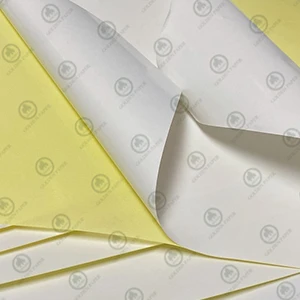
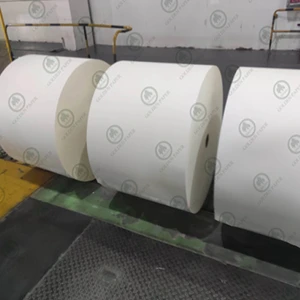

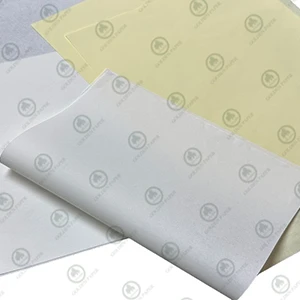

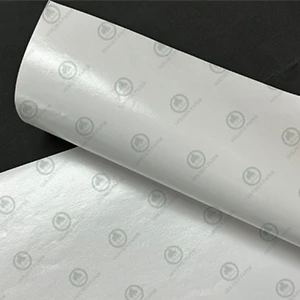

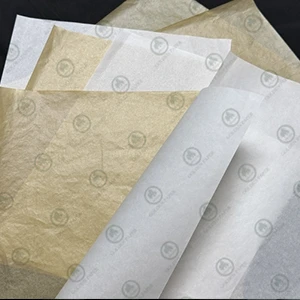

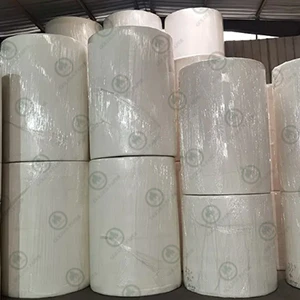

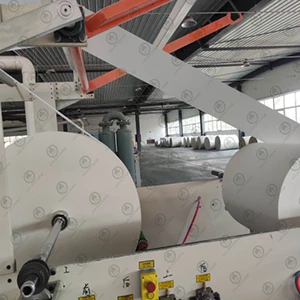
In an election system, people often focus on rules, procedures, and technical methods, while paying less attention to a basic yet essential element: paper. Whether it is official ballots or the large number of instruction sheets, sample ballots, and campaign materials used during an election, paper serves as the basic medium for carrying and delivering information. The stability of paper performance directly affects readability and print quality, and can also influence the smooth operation and accuracy of the voting process.
In practice, “ballot paper” is not a single concept. Different types of election-related printed materials have clearly different requirements for paper. Official ballots and election-related printing do not belong to the same category of paper use.
In real applications, election printing materials can generally be divided into two types.
The first type is official ballots. These papers are usually standardized by relevant authorities. In some regions, security paper is used, incorporating features such as watermarks, security fibers, or special markings to improve security and traceability. This type of paper is often supplied through designated channels and does not fully fall within the scope of regular commercial printing paper.
The second type includes election-related printed materials, such as sample ballots, voting instructions, voter guides, campaign flyers, and posters. These materials are not used directly for vote counting, but they are still an essential part of the election process. Their main requirements focus more on readability, printability, cost control, and supply reliability.
Understanding this distinction is the basis for correctly discussing paper used in election printing.
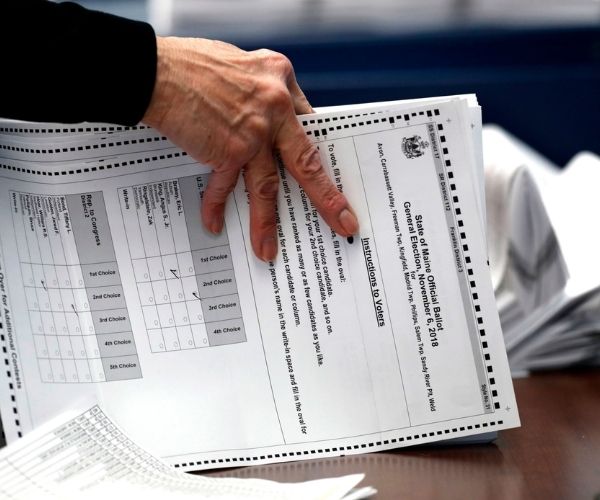
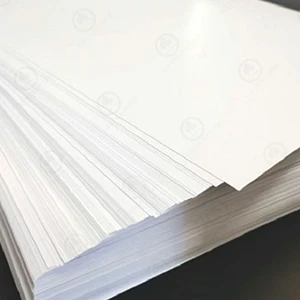
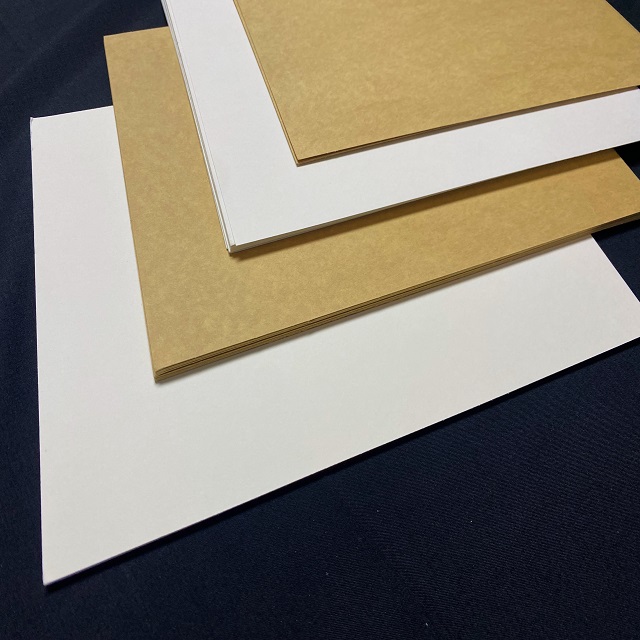
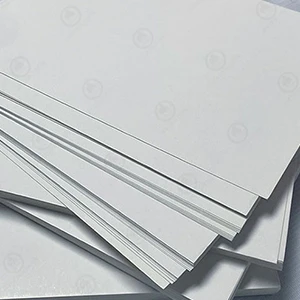
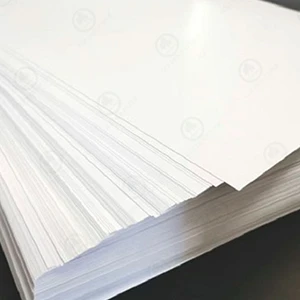
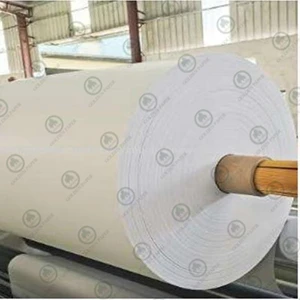
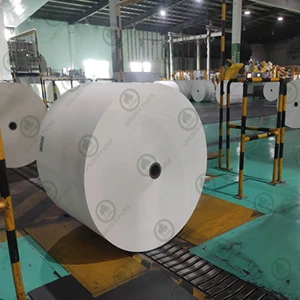
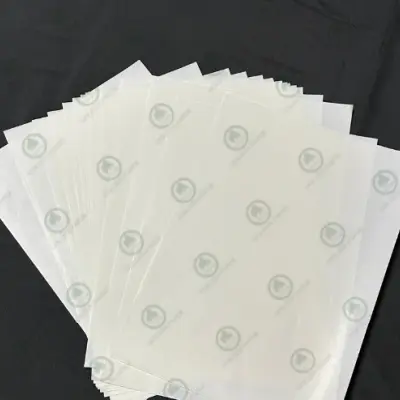
Among election-related printed materials, uncoated woodfree paper is the most common and most established paper type.
Because its surface is uncoated, uncoated woodfree paper has low glare and does not easily cause visual fatigue during long periods of reading, making it well suited for carrying large amounts of text. For this reason, it is widely used for government documents, examination papers, operating instructions, and various public information materials.
In election scenarios, materials such as sample ballots, voting process instructions, and voter information booklets are often text-heavy and require clear and stable print results. The good ink absorption of uncoated woodfree paper helps keep text edges clear and reduces smudging. At the same time, its moderate stiffness and strength meet the needs of distribution, handling, and short-term storage.
In addition, the stability of basis weight and thickness is important for high-speed printing equipment and post-printing processes such as binding, which is one of the reasons this paper type has been used for a long time.
Elections are not only about voting itself, but also involve extensive information delivery and public communication. In campaign promotion, public notices, and visual displays, paper plays a different role.
Coated paper (art paper), with its smooth surface and even coating, can achieve higher color saturation and clearer image reproduction. It is commonly used for posters, promotional flyers, and folded brochures that focus on visual presentation. In these applications, image quality and overall visual impact are often more important than writing performance.
Therefore, in scenarios such as campaign materials, policy introduction leaflets, and indoor or outdoor posters, coated paper is a more suitable choice. This type of paper is not used for official voting, but is used to attract attention and deliver information, serving a different function from uncoated paper within the election system.
When discussing paper used for ballots, security paper is often mentioned. It should be clarified that security paper is mainly used for official ballots or high-security documents in certain regions. Its core value lies in anti-counterfeiting and identification, rather than general printing performance.
Because its production process and supply system are relatively specialized, security paper is usually provided by designated manufacturers and is not widely used for all election-related printed materials. For large volumes of instructional and promotional materials, stable, reliable, and printable standard printing paper is often a more practical choice.
Election printing is not an application that can be covered by a single type of paper. From official ballots to voter guides, from process instructions to promotional posters, different printed materials serve different functions and place different requirements on paper performance. Rather than pursuing the most complex paper solution, choosing paper that matches the intended use is more appropriate. Golden Paper has more than 20 years of experience in paper manufacturing. If you have paper sourcing needs, you are welcome to contact us.