EN
EN
 fr
fr  de
de  es
es  it
it  ru
ru  pt
pt  ar
ar  vi
vi  tr
tr  id
id 

Phone:
0086 27 688745330086 18049845758
 GOLDEN PAPER

.webp "Digital Transfer Paper/Sublimation Paper")
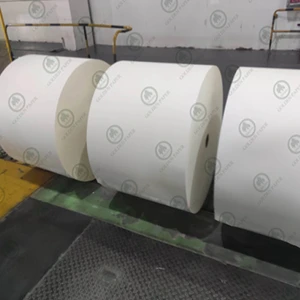

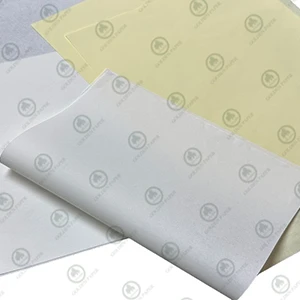

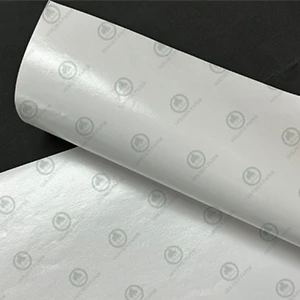
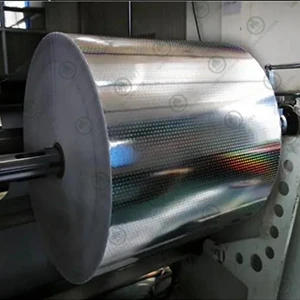


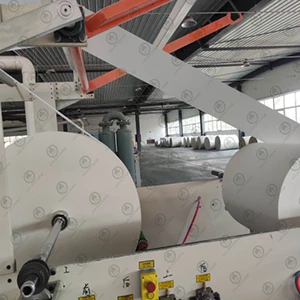
Why can the same printing process produce sharp, detailed images on one paper but blurred text and uneven colors on another? One important factor is paper smoothness. The condition of the paper surface affects how ink contacts and transfers to the sheet, how printing dots are reproduced, and how clearly fine details appear. For printers, converters, and paper buyers, understanding the relationship between paper smoothness and print quality can help them select the right paper for high-quality printing applications. We Golden Paper will explain this for you!
Paper smoothness refers to how even and level the surface of a sheet is at a microscopic level. A highly smooth paper has fewer microscopic peaks, valleys, and surface irregularities, while a paper with lower smoothness has a more uneven surface.
Although a sheet may look smooth to the naked eye, its surface contains microscopic irregularities. These differences become important during printing because ink needs to make consistent contact with the paper surface. The more uniform the surface, the more consistently ink can be transferred and distributed.
Paper smoothness is therefore an important paper property for applications where clear images, fine lines, small text, and accurate halftone reproduction are required.

Paper smoothness affects printing mainly by influencing ink transfer, dot reproduction, printing pressure, and the appearance of the finished print.
During printing, ink needs to make sufficient and relatively uniform contact with the paper surface. When the surface is rough, microscopic peaks may contact the printing plate or blanket while recessed areas may receive less ink. This can result in uneven ink transfer, particularly when printing small dots and fine details.
A smoother and more uniform paper surface provides more consistent contact between the ink and the sheet. This helps ink transfer more evenly and makes it easier to reproduce the intended shape and density of printed areas.
This is particularly important for high-resolution printing, where even small differences in ink transfer can affect image clarity.
Fine printing depends heavily on accurate reproduction of halftone dots. Images are often created from dots of different sizes and densities, allowing the printing process to reproduce different shades and details.
When paper has a rough or porous surface, ink can spread into surface irregularities and fibers. This may change the size and shape of printed dots. Fine dots can become less distinct, while small text and thin lines may appear less sharp.
With a smoother and more uniform surface, ink can remain more controlled on the sheet. This helps reproduce small halftone dots, fine lines, text, and tonal transitions with greater clarity.
For this reason, paper smoothness is particularly relevant when producing detailed images or other fine printed elements.
Paper needs to maintain consistent contact with the printing system during the printing process. A rough surface contains more microscopic irregularities, which can affect how evenly the printing pressure is distributed across the sheet.
A smoother surface can provide more uniform contact between the paper and the printing components. This supports more consistent ink transfer, especially in multi-color printing.
However, printing registration accuracy is not determined by paper smoothness alone. Paper dimensional stability, moisture content, sheet condition, printing equipment, press settings, and other factors can also affect registration. Smoothness should therefore be considered as one part of overall printing performance rather than an isolated factor.
The condition of the paper surface also influences the appearance of the finished print.
A relatively smooth surface allows the printed ink film to appear more uniform, which can contribute to sharper images and cleaner text. This is especially noticeable when the design contains small text, thin lines, detailed images, or gradual tonal changes.
By comparison, a rougher surface can scatter reflected light more strongly. Depending on the paper grade and printing conditions, this may make fine details appear less distinct and printed colors look less visually vivid.
The final appearance, however, is also influenced by other paper properties such as brightness, whiteness, opacity, gloss, coating, and the characteristics of the printing ink.
High-smoothness paper is generally more suitable for fine printing because its more uniform surface allows more consistent ink transfer and better reproduction of small printing details.
Fine printing often involves elements that are sensitive to changes in ink transfer. These include small halftone dots, thin lines, small text, gradients, and detailed images.
When the paper surface is sufficiently smooth and uniform, the printing process has a more consistent surface on which to reproduce these details. This can help improve image sharpness and maintain clearer transitions between different tones.
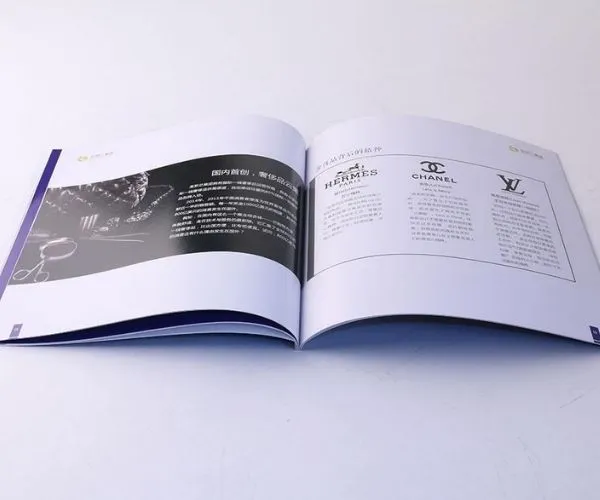
For this reason, smooth papers are commonly considered for applications such as commercial printing, brochures, catalogs, magazines, premium books, labels, and high-quality packaging.
The appropriate paper, however, depends on the complete printing requirement. Smoothness should be selected together with other paper properties and the characteristics of the printing process.
No. Higher smoothness does not automatically mean that a paper is better for every printing application.
Different printing jobs have different requirements. A high-resolution commercial printing project may require a smooth and uniform surface to reproduce detailed images, while another application may prioritize paper texture, writing performance, bulk, stiffness, opacity, or cost.
Paper selection should therefore consider the printing process, ink system, required image quality, and final application.
For example, coated printing papers are often selected when high image detail and controlled ink transfer are important. Uncoated papers may be preferred for applications where writing properties, paper texture, or a particular tactile appearance are more important.
The goal is not simply to choose the smoothest paper available. The goal is to choose a paper whose surface and overall properties are appropriate for the intended printing process.
No. Paper smoothness and paper gloss are different properties.
Paper smoothness describes how even the paper surface is at a microscopic level, while gloss describes how strongly the surface reflects light in a more mirror-like direction.
The two properties can be related, but they are not interchangeable. A paper can have a relatively smooth surface without having a very high gloss level, depending on its coating, surface treatment, and overall structure.
This distinction is important when selecting printing paper because smoothness affects factors such as ink contact and dot reproduction, while gloss primarily affects the visual appearance of the paper surface and printed product.
When selecting paper for a printing project, smoothness should be evaluated together with the requirements of the final product.
If the printed design contains detailed images, small text, fine lines, gradients, or other elements that require accurate reproduction, a paper with a smooth and uniform surface is generally a suitable choice.
However, paper buyers should also consider basis weight, brightness, opacity, gloss, bulk, stiffness, dimensional stability, surface treatment, and compatibility with the intended printing process.
For printers and converters, the best choice is therefore not necessarily the paper with the highest smoothness. Instead, the paper should provide the right balance between surface characteristics, print performance, physical properties, and application requirements.
Paper smoothness affects printing quality because it influences how evenly ink contacts and transfers to the paper surface. A smoother and more uniform surface can help preserve halftone dots, fine lines, small text, and image details, making it suitable for many high-quality printing applications.
However, smoothness is only one part of paper performance. The right paper should also match the printing process, ink system, required print quality, and final application.
Understanding these factors can help printers, converters, and paper buyers make more informed decisions when selecting printing paper for fine and high-resolution applications.
What is paper smoothness in printing?
Paper smoothness describes how even the paper surface is at a microscopic level. It affects the contact between the paper and ink during printing and therefore influences ink transfer and the reproduction of printed details.
Why is smooth paper better for printing?
Smooth paper provides a more uniform surface for ink transfer. This can help reproduce small halftone dots, fine lines, small text, and detailed images more clearly.
Does paper smoothness affect ink transfer?
Yes. Paper surface structure affects how consistently ink contacts and transfers to the sheet. Smoothness should also be considered together with paper porosity, coating, and other surface properties.
Does paper smoothness affect print quality?
Yes. Paper smoothness can influence ink transfer, halftone dot reproduction, image sharpness, and the appearance of fine details. However, overall print quality also depends on the paper grade, ink, printing process, equipment, and press conditions.
Is high paper smoothness always better?
No. Higher smoothness is not automatically better for every application. The appropriate smoothness depends on the printing process, required print quality, paper grade, and final use.
What type of paper is suitable for fine printing?
Paper with a smooth and uniform surface is generally suitable for fine printing because it can provide more consistent ink transfer and help reproduce small dots, fine lines, text, and detailed images.