EN
EN
 fr
fr  de
de  es
es  it
it  ru
ru  pt
pt  ar
ar  vi
vi  tr
tr  id
id 

Phone:
0086 27 688745330086 18049845758
 GOLDEN PAPER

.webp "Digital Transfer Paper/Sublimation Paper")



When sourcing paper for food packaging, baking, or industrial use, one question always matters: is the material truly safe?
As sustainability becomes more important, more buyers are paying attention to terms like coating-free and additive-free. This is why silicone-free parchment paper is gaining attention in the market.
But is it actually safer, or just a marketing concept? To make the right decision, you need to look at the material itself, how it is produced, and how it will be used in real applications.

In your business, every paper choice affects how your product performs and how your customers perceive your brand.
Silicone-free parchment paper is not simply popular because it removes silicone. It is gaining attention because, in certain situations, it can help you reduce potential risks while meeting stricter food safety and environmental requirements.
To evaluate the safety of parchment paper, you should start with the raw materials.
When paper is made from virgin wood pulp or bamboo pulp, and unnecessary chemical additives are minimized, the structure of the paper tends to be more stable. In this case, the performance comes from the fiber structure itself rather than relying on a surface coating. As a result, the risk of substance migration during use is lower.
Traditional silicone-coated parchment paper performs well because the silicone layer creates a reliable non-stick and grease-resistant surface. This makes it widely used in baking and food processing.
From a technical standpoint, food-grade silicone is considered safe. However, in real procurement, consistency across suppliers is not always guaranteed. If raw materials or processing are not well controlled, impurities or residues may remain in the coating, which could become a concern under high temperatures.
By removing the coating layer, silicone-free parchment paper simplifies the material composition. When the base paper is reliable, it becomes easier to verify safety and pass testing.
So, silicone-free does not automatically mean safer, but it does make the product easier to control and evaluate.
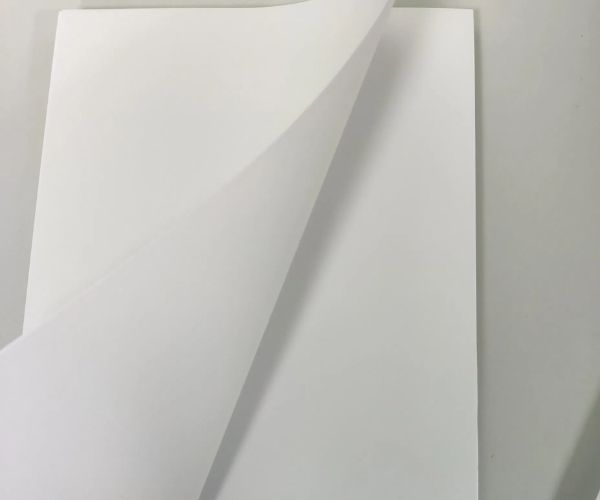
It is difficult to judge whether silicone-free baking paper is safer without considering how it will be used.
If your product is used for baking or food packaging, safety depends on whether it meets food contact standards such as FDA or LFGB. In this context, silicone-free parchment paper helps avoid uncertainties related to coatings, but it also places higher demands on the base paper.
Without a coating, grease resistance relies on how the fibers are processed and how dense the paper structure is. This means the manufacturing process must be stable. Otherwise, the paper may not perform consistently in real use.
Heat resistance is another important factor. Even without silicone, unstable paper under high temperatures can still create risks.
For food-related applications, safety is not defined by whether the paper is silicone-free. It depends on whether the paper remains stable under actual working conditions.
When the paper is used for industrial packaging or separation purposes, the situation changes. Since there is no direct contact with food, the focus shifts to performance and reliability. In these cases, silicone-free parchment paper can be easier to approve in environmental audits, which helps build trust with your customers.
In practice, you do not need to treat silicone-free and silicone-coated parchment paper as direct opposites.
The better approach is to match the product to your customer’s expectations. If your market values food safety or sustainability, silicone-free parchment paper can help you stand out.
However, if your application requires strong non-stick performance, especially in complex baking or continuous production, high-quality silicone-coated paper may offer more consistent results.
In markets such as Europe and North America, buyers tend to pay more attention to environmental impact, which makes silicone-free solutions more attractive. In more cost-sensitive markets, the decision usually comes down to balancing performance with overall cost.
This is why material labels alone should not determine your choice.
In long-term sourcing, you will find that safety is influenced more by the supply system than by a single feature.
If raw materials are inconsistent, even silicone-free paper can vary in quality. If production is not well controlled, performance may not remain stable.
Testing also plays a key role. Only products that go through proper testing can meet market requirements and gain customer trust. In addition, a supplier’s ability to deliver consistently will directly affect your business continuity.
In other words, silicone-free is only one factor. What really matters is whether the product performs reliably over time and whether the supply chain is stable.
Overall, when harmful substances are avoided and coating-related migration risks are reduced, silicone-free parchment paper can offer certain safety advantages, especially in applications where food safety and sustainability are important.
If you are trying to balance safety with performance, Golden Paper can provide solutions based on your specific needs. Whether you choose silicone-free or silicone-coated parchment paper, the goal is to ensure consistent quality and support your business in delivering reliable products to your customers.