EN
EN
 fr
fr  de
de  es
es  it
it  ru
ru  pt
pt  ar
ar  vi
vi  tr
tr  id
id 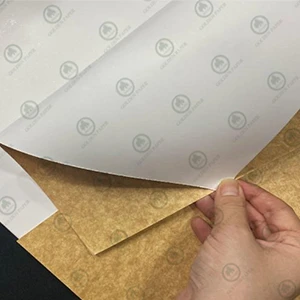
Phone:
0086 27 688745330086 18049845758
 GOLDEN PAPER

.webp "Digital Transfer Paper/Sublimation Paper")
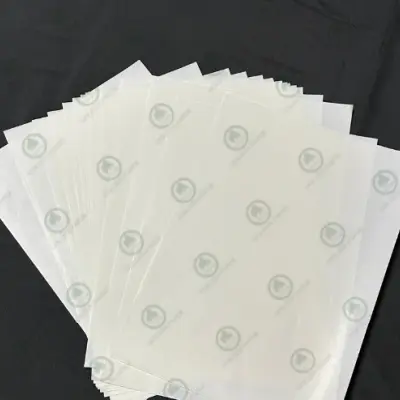
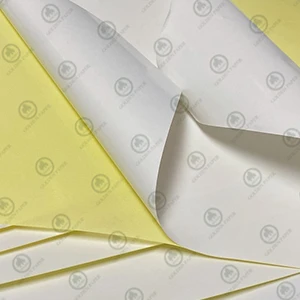
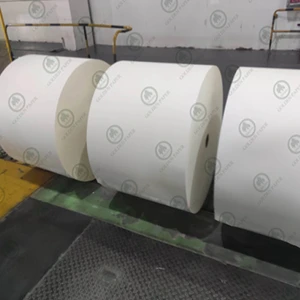

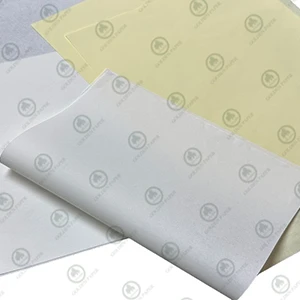


In commercial printing and packaging production, Coated Paper and Ivory Board (White Cardboard / C1S Board) are both high-frequency paper grades. However, they differ fundamentally in structure, performance, printing results, and end-use applications. If you are selecting materials for brochures, packaging boxes, or premium printed products, understanding the difference between coated paper and ivory board will help you make a more professional and cost-effective decision.
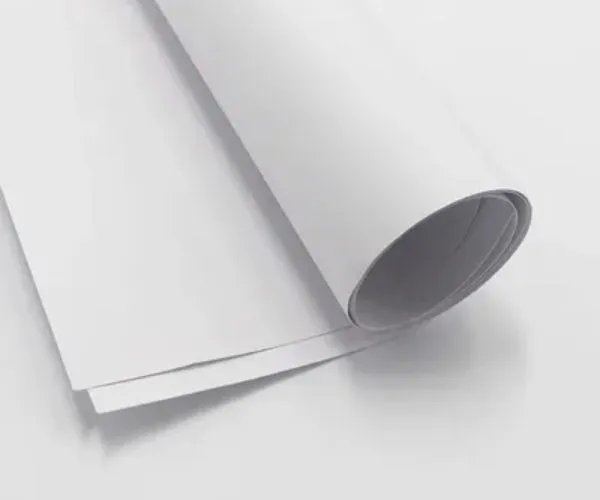
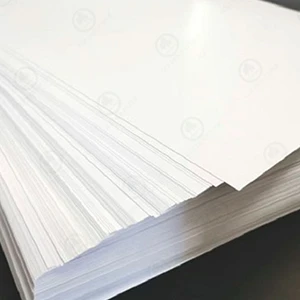
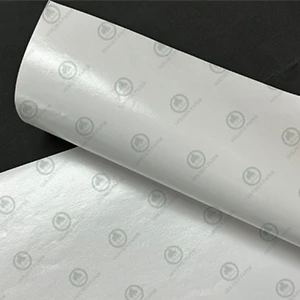
From a manufacturing perspective, coated paper is a typical coated processing paper. Its base paper is usually made from bleached chemical wood pulp, sometimes combined with partially bleached mechanical pulp. After surface coating, drying, and supercalendering, it forms a highly smooth outer layer.
The overall thickness generally ranges from 0.06 mm to 0.465 mm, making it relatively thin. It is particularly suitable for printing applications that demand excellent surface performance but do not require strong structural support.
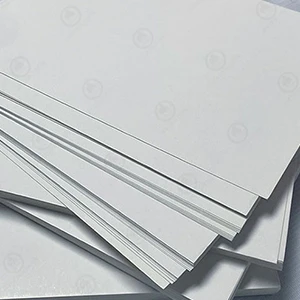
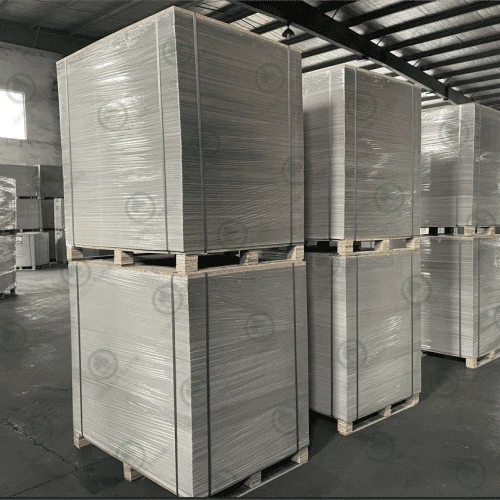
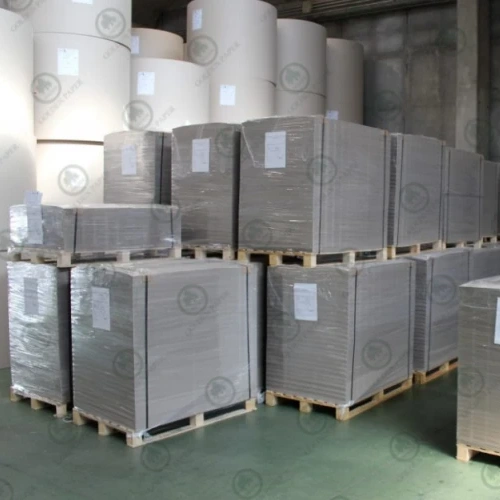
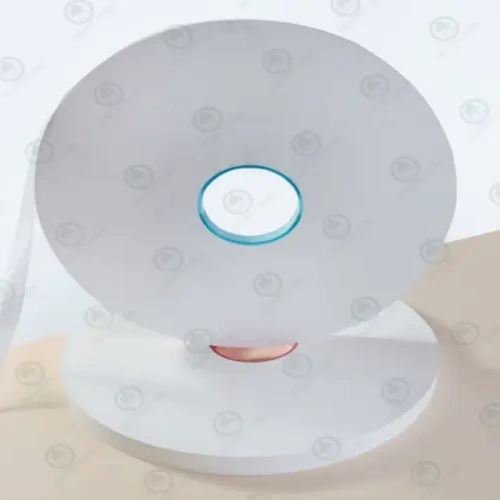
In contrast, ivory board is primarily made from high-quality virgin wood pulp and can be produced in single-ply or multi-ply composite structures. Its thickness typically ranges from 0.27 mm to 0.55 mm, which is noticeably thicker than most coated paper grades.
Because of its dense fiber structure, ivory board has a heavier hand feel and stronger structural support. It performs better in applications where load-bearing capacity or forming strength is required.
At the material level, coated paper emphasizes surface print performance, while ivory board focuses more on structural strength and rigidity.
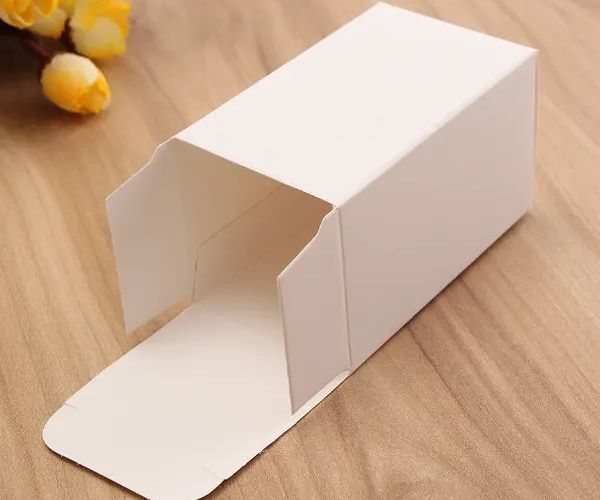
Stiffness is a key technical indicator that distinguishes coated paper from ivory board.
Although coated paper has a smooth surface, its overall fiber structure is thinner and its rigidity is relatively low. It can deform more easily under bending or pressure. Therefore, it is more suitable for single-sheet printed materials or bound book interiors. It is designed primarily for printing performance rather than structural forming.
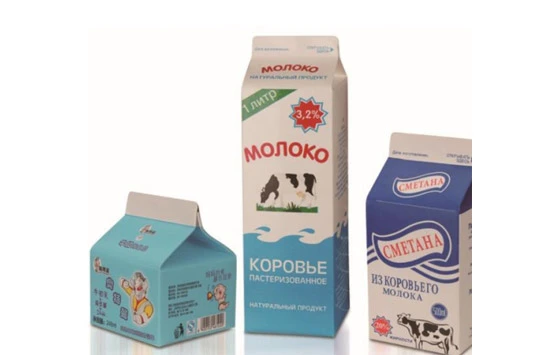
Ivory board, on the other hand, offers higher stiffness and bending resistance. It is less likely to warp or deform and maintains good shape stability. This makes it an important material for business cards, certificates, invitations, and various packaging boxes.
Especially during die-cutting, creasing, and folding processes, ivory board shows clear structural advantages.
Simply put, coated paper functions mainly as a printing medium, while ivory board serves more as a structural material.
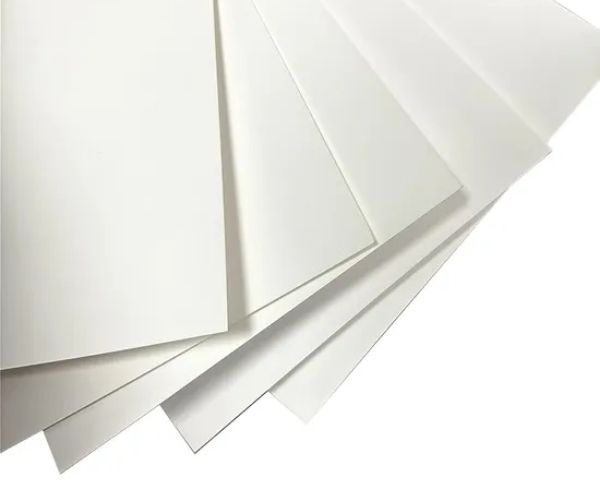
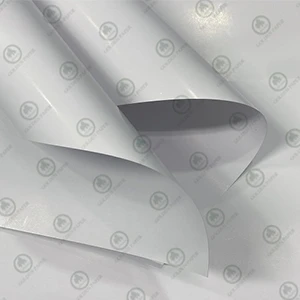
The most distinctive feature of coated paper is its high gloss and high smoothness coating surface. After uniform coating treatment, the surface becomes refined and almost mirror-like. It absorbs ink quickly and delivers precise color reproduction. Images appear sharp, with strong contrast and high color saturation.
Whether for catalog covers, advertising flyers, or premium promotional materials, coated paper produces vivid and crisp visual results.
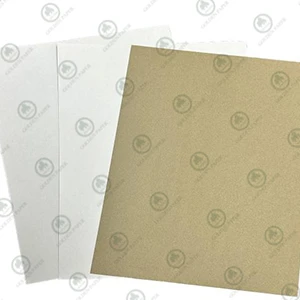
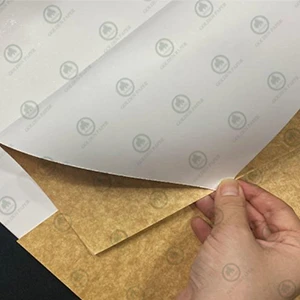
Ivory board typically uses a single-side coated structure (C1S board). One side is smooth and suitable for high-quality printing, while the reverse side is relatively rough, similar to copy paper.
This design ensures good print performance on the front side while improving overall friction and processing stability. In packaging applications, this structure helps finished products maintain their shape and improves stacking stability.
Therefore, if your priority is color performance and image clarity, coated paper has a stronger advantage. If you need to balance printing quality with structural functionality, ivory board is a more versatile option.
From a practical application perspective, the separation between coated paper and ivory board is clear. The distinction is fundamentally determined by their physical structure and printing performance.
Because coated paper undergoes fine coating and calendering treatment, it achieves outstanding smoothness and gloss. It can accurately reproduce delicate halftone dots and vibrant color transitions.
When printed products require high color accuracy, image sharpness, and strong visual impact—such as high-end book covers, color catalogs, product brochures, and advertising materials—coated paper is often the better choice. In these applications, visual presentation is the core requirement, while structural strength is secondary.
In contrast, ivory board’s advantages in fiber structure and thickness make it more suitable for applications that require structural support and forming capability. Its high stiffness and bending resistance allow it to maintain flatness and a premium feel in products such as business cards, certificates, and invitations.
For covers, desk calendars, folding cartons, and small-to-medium packaging boxes, the paper must not only print well but also remain stable during die-cutting, creasing, and folding. In these scenarios, durability and stiffness are often more important than maximum color vibrancy, which is why ivory board is widely adopted.

Coated paper has a surface coating layer, which may present risks such as coating peeling or surface blocking in high-humidity environments. If storage conditions are not properly controlled over time, print performance may be affected. Therefore, moisture control during warehousing and transportation is essential.
Ivory board, made primarily from high-quality wood pulp with strong internal fiber bonding, generally offers more stable moisture resistance. After printing, its graphics are less affected by environmental changes, making it suitable for products that require longer storage cycles.
The production process of coated paper involves multiple coating and supercalendering stages, with strict requirements for base paper quality and coating formulation. As a result, high-basis-weight and premium-grade coated paper typically come at a higher price point.
The manufacturing process of ivory board is relatively more straightforward, and its raw material cost structure tends to be more stable. In medium and lower basis weights, ivory board often shows clearer cost advantages.
Of course, final pricing still depends on basis weight (GSM), brightness level, stiffness specifications, and whether special surface treatments are required.
In actual procurement, it is recommended to evaluate your choice based on printing method, basis weight requirements, post-press processing, and overall budget structure. There is no absolute superiority between coated paper and ivory board—only the solution that best fits your specific application. If you are looking for coated paper for brochure printing, ivory board for packaging production, or a reliable supplier for commercial printing and packaging paper, feel free to contact Golden Paper.