EN
EN
 fr
fr  de
de  es
es  it
it  ru
ru  pt
pt  ar
ar  vi
vi  tr
tr  id
id 


.webp "How Capacity Shifts and Cost Pressure Are Reshaping the Market")
Phone:
0086 27 688745330086 18049845758
 GOLDEN PAPER










.webp "Digital Transfer Paper/Sublimation Paper")


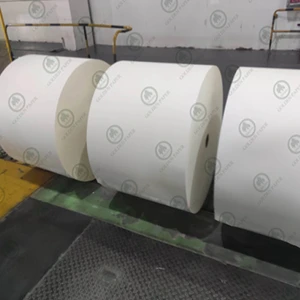








As the second quarter of 2026 begins, the packaging paper market has not shown the strong rebound some expected. Instead, based on Golden Paper's ongoing communication with global customers and market tracking, the industry is now in a typical soft balance phase. Supply is tightening to some extent, but price momentum remains limited, leading to a more stable and rational market trend.
At first glance, production shutdowns among major paper mills suggest reduced supply. However, this has not translated into a one-sided increase in packaging paper prices.
From Golden Paper's market observations, several constraints continue to limit price growth. First, downstream demand from carton factories and packaging companies remains largely driven by essential orders. End-user consumption recovery is still gradual, which keeps restocking behavior conservative. Most buyers are purchasing based on short-term needs rather than building inventory.
Second, raw material costs remain relatively stable. Prices of recovered paper and wood pulp have not shown a sustained upward trend, which means cost support for paper prices is weak. Without strong cost pressure, it is difficult for packaging paper prices to rise significantly.
In addition, overall market inventory is still at a relatively high level. Feedback collected by Golden Paper from different regions indicates that inventory digestion is slower than expected, which continues to put pressure on price increases.
As a result, the packaging paper market is more likely to fluctuate within a range during April and May, with localized strength in certain grades or regions, but without strong conditions for sharp increases or rapid declines.
The recent wave of production shutdowns among leading paper mills should not be viewed simply as output reduction. Instead, it reflects a more proactive approach to managing supply and demand.
Golden Paper sees two key drivers behind this trend. On one hand, scheduled maintenance is a routine part of mill operations. Temporary shutdowns allow for equipment inspection and thermal system upgrades, ensuring long-term production stability and product quality.
More importantly, under current market conditions, shutdowns are being used as a tool for supply adjustment. Since the first quarter of 2026, downstream demand recovery has been weaker than expected, while previously added production capacity continues to come online. This has intensified supply-demand imbalance and increased inventory pressure.
In response, leading mills are reducing output through planned downtime, limiting market supply and helping stabilize prices at a lower level. This indicates a shift in the industry—from passively reacting to market changes to actively managing production cycles.
By analyzing supply, demand, and inventory dynamics, Golden Paper believes the packaging paper market has entered a soft balance phase.
In this stage, supply tightening alone is not strong enough to push prices significantly higher, while demand recovery is not fast enough to absorb existing inventory. Market performance is driven more by short-term adjustments rather than long-term trends.
This also means price fluctuations may become more frequent but remain within a limited range. For market participants, timing and purchasing rhythm are becoming more important than simply predicting price direction.
Under current conditions, Golden Paper has observed a noticeable shift in purchasing strategies among downstream buyers.
On one hand, companies are paying closer attention to supply timing. Due to regional production shutdowns and uneven deliveries, certain areas may experience short-term supply tightness, especially for lower grammage packaging paper. These structural imbalances require early attention.
On the other hand, purchasing decisions are becoming more rational. Instead of aggressively stocking up during price increases, most buyers are aligning procurement with actual order cycles, aiming to balance inventory levels and cash flow.
This shift highlights a broader change in the market. In a volatile but range-bound environment, procurement is no longer purely price-driven, but increasingly focused on managing timing and flexibility.
Overall, the packaging paper market is currently in a transitional phase between supply adjustment and demand recovery. While production shutdowns have helped ease inventory pressure to some extent, they are not sufficient to fundamentally change the market structure.
In Golden Paper's view, the market is likely to remain range-bound in the near term. Price trends will depend largely on the pace of inventory reduction and the recovery of downstream demand. For buyers, maintaining a balance between procurement timing and inventory control will be critical to navigating market uncertainty.