EN
EN
 fr
fr  de
de  es
es  it
it  ru
ru  pt
pt  ar
ar  vi
vi  tr
tr  id
id 
.webp "How to Choose the Right Duplex Board With White Back")
Phone:
0086 27 688745330086 18049845758
 GOLDEN PAPER

.webp "Digital Transfer Paper/Sublimation Paper")





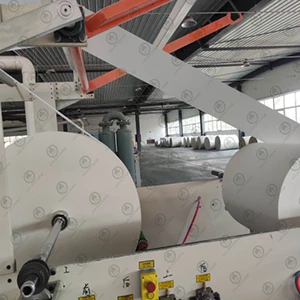
The global paper industry is undergoing a major structural adjustment. As digitalization continues to reduce demand for traditional printing papers, more paper manufacturers are reassessing their production strategies and moving capacity toward packaging grades with stronger market potential.
Recently, Germany-based Palm Group announced that it will convert PM7 at its King's Lynn Mill in the United Kingdom from newsprint production to corrugated case material (CCM) production. The conversion is expected to be completed in the first quarter of 2027.
This change is not only a production adjustment made by an individual paper company. It also reflects a broader transformation taking place across the European paper industry, where capacity is gradually shifting from declining graphic paper markets toward growing packaging applications.
According to Palm Group, PM7 currently produces newsprint with an annual capacity of approximately 400,000 tonnes. After the conversion, the machine will produce lightweight corrugated case material with an expected annual capacity of around 700,000 tonnes. The new production line will mainly use recycled fiber as raw material, with basis weights starting from 60 g/m².
The key factor behind this adjustment is the long-term decline of the European newsprint market.
Over the past decade, newsprint demand in Western Europe has fallen significantly as readers, publishers, and media companies continue to move toward digital platforms. This change is considered a structural trend rather than a temporary market fluctuation.
For paper manufacturers, maintaining large-scale production capacity in a declining market has become increasingly challenging. As a result, converting existing paper machines to produce packaging materials has become an effective way to adapt to changing market demand and improve production efficiency.
At the same time, packaging paper continues to benefit from strong market drivers.
The growth of e-commerce has increased demand for reliable transport packaging, while sustainability initiatives in Europe are accelerating the adoption of fiber-based packaging solutions. Corrugated case material, as the key raw material for corrugated boxes, continues to see stable demand from industries such as food, retail, logistics, and manufacturing.
Palm's decision to convert PM7 represents a strategic shift toward a market segment with stronger long-term growth potential. By reallocating production resources, paper manufacturers can reduce dependence on declining paper grades while supporting the increasing demand for packaging materials.
The conversion of PM7 may also influence the future supply structure of the European packaging paper market.
Once completed, the upgraded machine will add significant lightweight corrugated paper capacity to the market. For packaging converters and paper buyers, additional supply may provide more sourcing options, especially in the lightweight corrugated material segment.
However, the expansion of recycled packaging paper production also highlights another important industry challenge: the availability and stability of recycled fiber supply.
Across Europe, recycled paper has become an increasingly important raw material source for packaging paper production. Driven by circular economy goals and environmental regulations, more manufacturers are investing in recycled fiber-based products.
However, producing high-quality packaging paper requires more than access to raw materials. Stable fiber supply, advanced production technology, and consistent product performance are becoming increasingly important factors when buyers evaluate long-term suppliers.
Another important trend highlighted by Palm's conversion is the continued development of lightweight packaging materials.
Reducing paper weight while maintaining strength has become a major focus for the packaging industry. Lightweight corrugated materials can help reduce raw material consumption and improve transportation efficiency while still meeting packaging performance requirements.
For packaging paper producers, achieving this balance requires strong manufacturing capabilities. Lower basis weight products must maintain key properties such as strength, stiffness, and processing performance.
For buyers, this means supplier selection will increasingly depend not only on pricing but also on production stability, quality consistency, and long-term supply reliability.
Palm's project is part of a wider transformation across the European paper industry.
In recent years, several paper manufacturers have reduced capacity in traditional printing paper grades and redirected investment toward packaging paper, food-grade paper, and other growing segments.
This shift reflects a broader change in global paper consumption patterns. Printing paper markets continue to face pressure from digital alternatives, while packaging paper is supported by changes in consumer behavior, e-commerce growth, and sustainability requirements.
For global paper buyers, understanding these capacity changes is becoming increasingly important. Market supply, raw material availability, and production strategies of major manufacturers can all influence future procurement decisions.
The conversion of Palm's King's Lynn PM7 provides a clear example of how the paper industry is adapting to new market realities. Packaging paper is gradually becoming a more important growth area, while recycled fiber and lightweight materials are shaping the next stage of industry development.
For companies involved in packaging production and paper procurement, building relationships with reliable suppliers and monitoring global capacity trends will help create a more stable and flexible supply chain.